
Senior Research Scientist
Trenton Schulz
- Department Applied research in information and communication technology
- Phone number +47 22 85 26 70
- E-mail trenton@nr.stage.dekodes.no
Projects
- Digital inclusion
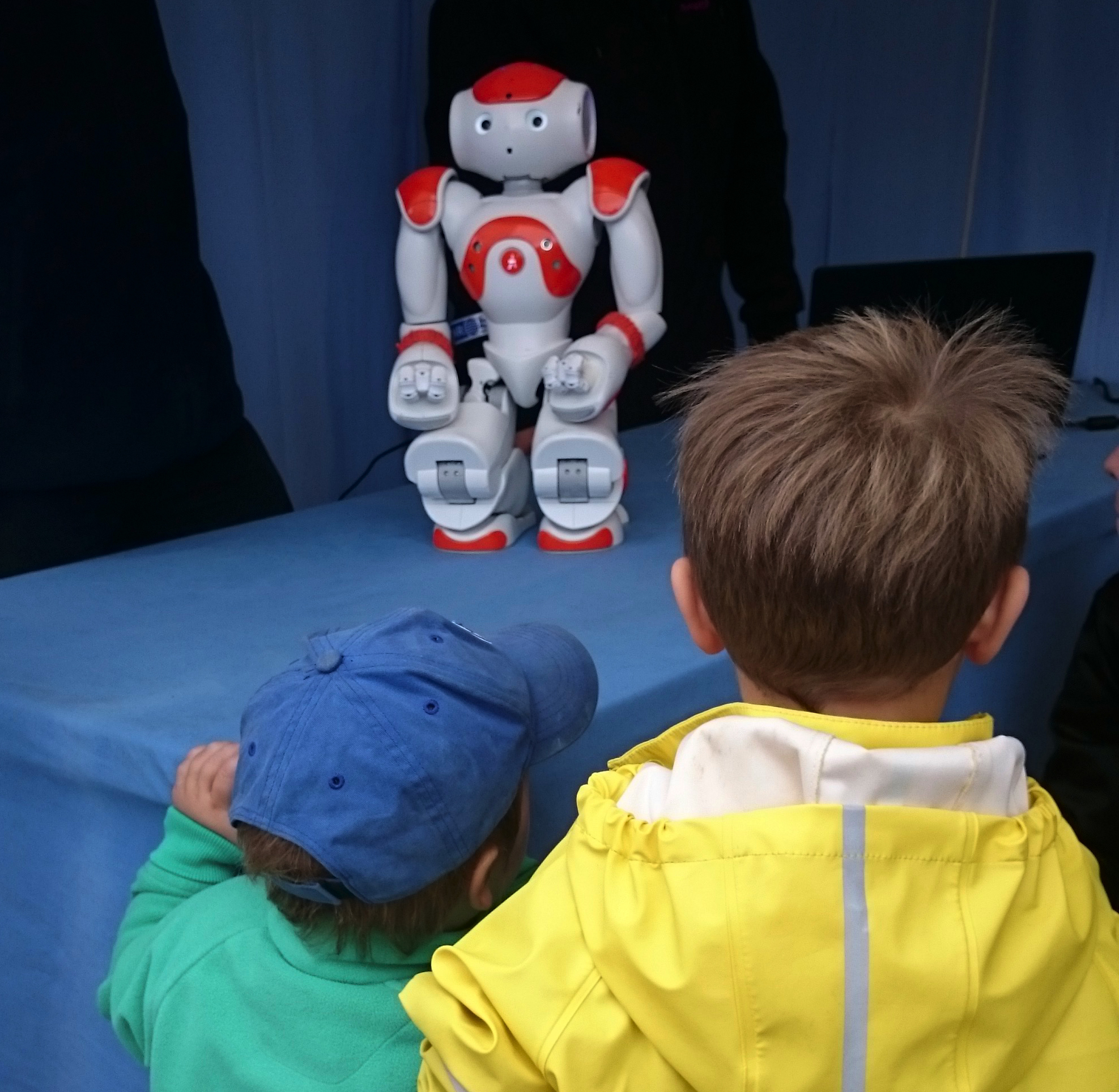
Robot-supported education for children with autism (ROSA)
- Digital inclusion
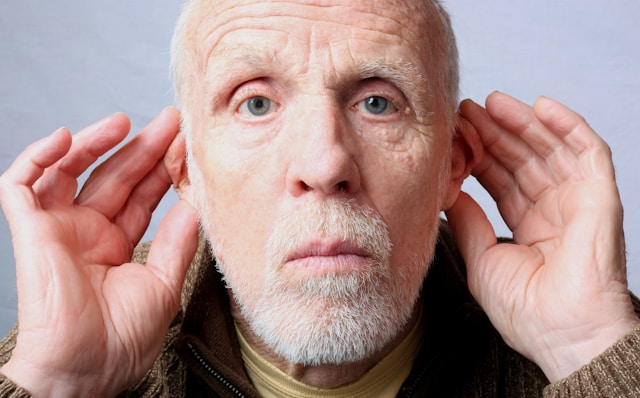
SoundVision
- Digital inclusion
- Universal design (UD)
- E-health and welfare technology
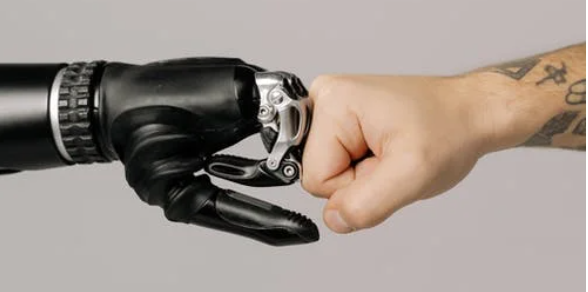
Universal design of robots
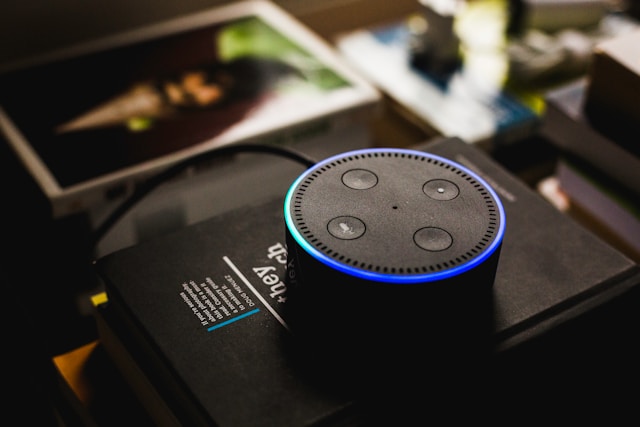
Can we trust in Internet of Things?

- Information and communication technology
- Digital inclusion
- Social robots
Standards for Universal Design of Robots
- Digital inclusion
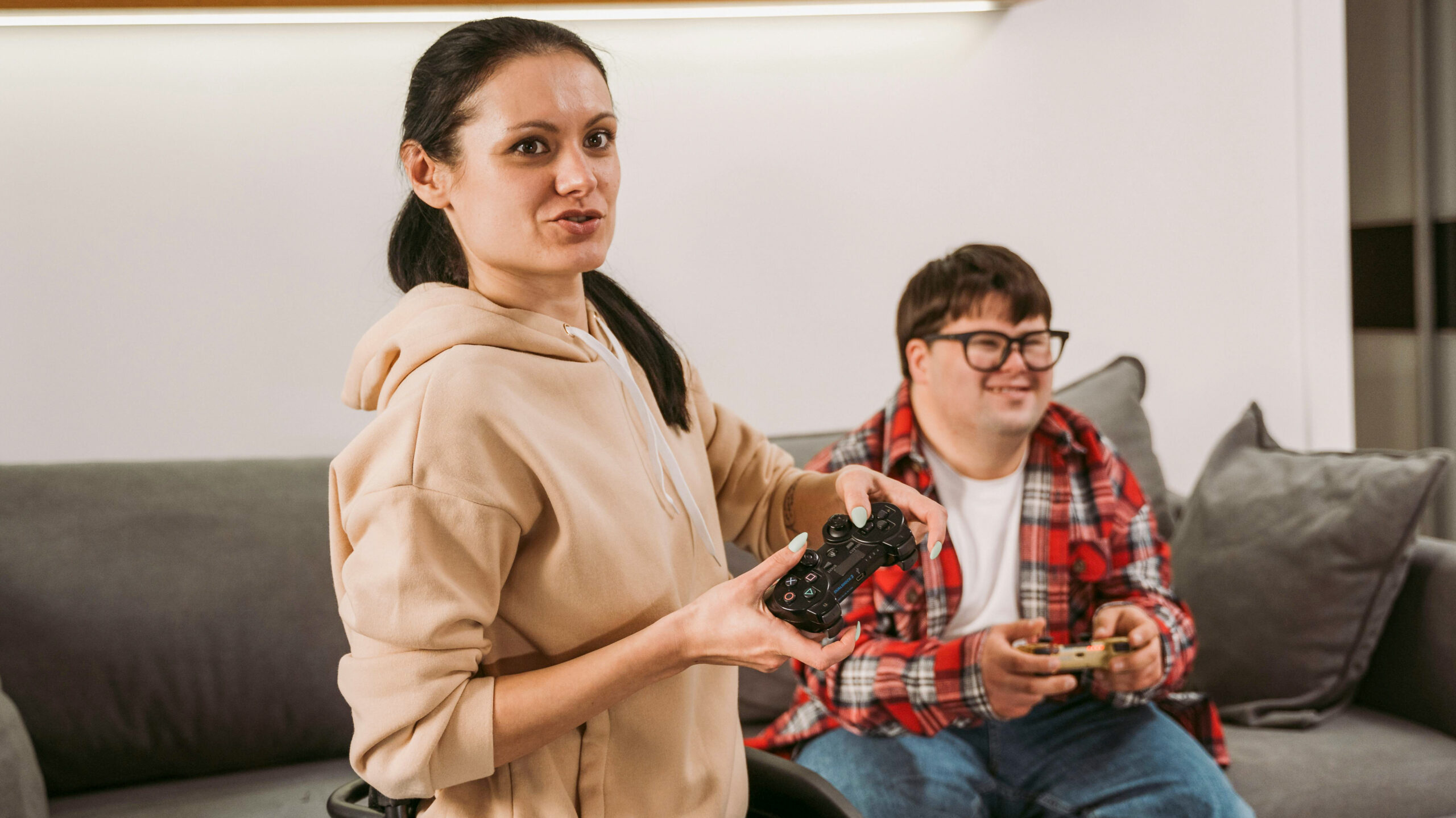
Gaming without barriers (Curb Cut)
Publications
- 176 publications found
Schulz, Trenton; Torrado, Juan Carlos; Sandhaug, Maren Kristiansen; Eide, Hilde; Guldberg, Karen and Fuglerud, Kristin Skeide. (2026).
Quality of Child-Robot Interaction for Pupils with Autism Across Multiple Sessions.
Show summary
We ran a study examining how socially assistive robots can help children with autism in their education at school. Twenty pupils at a special school in Norway used a repertoire of different activities centered around a NAO robot. We present the complete study design and the types of data that have been collected. We then focus on presenting the results from rating the quality of child-robot interaction in the 55 recorded sessions from the study. Three raters rated each session on the quality of interaction between the child and robot, with two to four sessions for each pupil. Raters were in substantial agreement. We calculated the average quality of interaction and calculated the change of quality over the sessions and found that most children had a positive or fair quality of interaction with the robot. Discussions with teachers also provided additional insight into the sessions. Overall, the repertoire can lead to good interaction with pupils, but it is necessary to involve teachers and parents in deciding if it is appropriate for a pupil.
Schulz, Trenton. (2026).
ROSA-repertoaret: Utvikling og praktisk anvendelse av aktiviteter og verktøy for robotstøttet læring. Frydenhaug skole, Norsk Regnesentral og Universitetet i Sørøst-Norge
Show summary
Presentasjon av ROSA-repertoaret, inkludert læringsaktiviteter, lærergrensesnitt, elevgrensesnitt, innhold fra Cyberbook og funksjonalitet knyttet til den sosiale roboten NAO. Innlegget beskriver hvordan teknologiske komponenter og pedagogisk innhold ble kombinert til et fleksibelt repertoar for bruk i spesialundervisning, samt erfaringer fra implementeringen i skolehverdagen
Schulz, Trenton and Badescu, Claudia-Andreea. (2026).
A Custom Web Application to Control NAO using Hypertext Transfer Protocol Secure.
Show summary
We present a web application for controlling NAO V5 and NAO V6 robots using Hypertext Transfer Protocol Secure (HT TPS). The application was designed for a study in a special school. The school staff have found the application easy-to-use and versatile, and it may be useful to other researchers or people interested in controlling NAO. The HT TPS constraint and the locked-down nature of NAO introduced additional development challenges, and the solutions to these challenges are worth sharing with the HRI community. We present characteristics of the web application, implementation details, how it has been set up, and how to use it. Although the application is usable in its current form, there are still things that can be improved to make the application more useful in other contexts. We therefore document how the remote control can be extended and potential starting points for improvement.
Holthaus, Patrick; Schulz, Trenton; Riches, Lewis; Badescu, Claudia-Andreea and Amirabdollahian, Farshid. (2026).
ZTL: Lightweight Communication Patterns for HRI.
Show summary
Human-robot interaction (HRI) programmers often struggle with operating older robot hardware due to the short support period provided by manufacturers and difficulties integrating modern software solutions. This paper introduces the ZTL Task Library (ZTL), a lightweight communication framework and protocol designed to decouple robot hardware from the operating platform via socket communication, thereby increasing robot lifetime. We present a task-based communication protocol facilitating the co-design of robot behaviours with non-programming experts. Our approach has been shown across different platforms to effectively mitigate incompatibilities between middlewares, simplifying control and usability, allowing for simultaneous addressing of multiple devices.
Guldberg, Karen; Eide, Tom; Eide, Hilde; Flatås, Bjørn Aksel; Jensen, Renate; Larsen, Kenneth; Torrado-Vidal, Juan-Carlos; Schulz, Trenton; Thygesen, Hilde; Søfting, Bente and Fuglerud, Kristin Skeide. (2026).
Methodological principles to guide innovation in robot-mediated education for autistic pupils.
Schulz, Trenton; Fuglerud, Kristin Skeide and Stølen, Vibeke. (2026).
Rapport fra workshops, personaer brukerreise og spørreundersøkelse.
Show summary
Dette notatet oppsummerer arbeidet gjort i ReDUGUSON-prosjektet. Prosjektet ble gjennomført i samarbeid med VoiceOn AS og finansiert av FORREGION VIKEN. Prosjektet hadde til hensikt å kartlegge hvem som kunne dra nytte av innholdsopplesningstjenester.
Vi holdt workshopper med personer med nedsatt syn og personer som hadde hatt slag og hadde afasi. I workshopene diskuterte man temaer knyttet til informasjon på offentlige sider, hjelpemidler og lovgivning. Deltakerne fikk mulighet til å undersøke tjenester som tilbød innholdsopplesning og ga tilbakemeldinger på dem. Noen ideer til forbedringer rundt etikk er presentert her. I tillegg skapte deltakerne sammen utkast til personaer og brukerreiser. De endelige utgavene av disse er presentert i rapporten.
Deltakerne hadde også mulighet til å fylle ut et spørreskjema. Spørreskjemaet viste stor nytte av innholdsopplesning for deltakerne.
Til slutt presenterer vi noen mulige steder for et hovedprosjekt.
Schulz, Trenton. (2025).
Standards for Universal Design of Robots.
Show summary
This note is a summary of the work done in the Standards for Universal Design of Robots
Project. It includes results from the standards search, a summary of standards purchased
in the project, requirements generated for our context of a robot used in a daycare or
special school, and updated requirements for the Norwegian context. We also document
how using standards can be combined with the work from accessibility testing in the
previous project on universal design of robots.
Schulz, Trenton; Torrado, Juan Carlos; Badescu, Claudia Andrea and Fuglerud, Kristin Skeide. (2025).
A Robot Repertoire for Assisting Teaching Children with Autism. Eindhoven University of Technology
Show summary
We present a set of components for a robot-based framework (or repertoire) that has been used for assisting teachers in their work with children with autism and how it has been used for two pilots and its main study. We also document challenges that we have encountered while deploying the repertoire and possible future directions.
Torrado, Juan Carlos; Schulz, Trenton; Guldberg, Karen; Søfting, Bente; Eide, Hilde; Thygesen, Hilde; Eide, Tom and Fuglerud, Kristin Skeide. (2025).
Lessons Learned from Two Pilots Using Social Robots with Children with Autism in a Special Education School in Norway.
Show summary
Children with autism present some difficulties regarding social communication and emotional regulation. These difficulties are addressed by special education programs in several ways – for instance, peer-to-peer communication using pictograms or tablet-based games to rehearse social situations and learn about facial expressions. Social robots have shown potential as vehicles for these activities. They can be perceived as “safe” interaction partners, as well as entail a special motivation for children who are fascinated by technology. In this paper, we describe the experience of two pilot studies study using a NAO robot for social communication at a special education school in Norway involving five and fifteen (N1=5, and N2=15) children with autism, respectively. Each child used the robot for1-2 sessions with the help of their main teacher and an additional teacher operating the robot. The teachers could select from a repertoire of activities that utilized the robot in various ways. The sessions were videotaped and analyzed by a multidisciplinary team composed of pedagogists, teachers, and researchers on ICTs, ethics, health, pedagogy and technology. The videos show that some children initiated and reciprocated communication with the robot in different contexts and with various degrees of support from the teachers. This paper describes design recommendations towards a longer study and pedagogical and ethical reflections on particular experiences observed in the pilot study.
Eide, Hilde; Guldberg, Karen; Eide, Tom; Renate, Jensen; Larsen, Kenneth; Schulz, Trenton; Søfting, Bente; Thygesen, Hilde; Torrado, Juan Carlos and Fuglerud, Kristin Skeide. (2025).
Communicating with «Robbie» - A case study: (How) Does Robbie provide Transactional Support in Learning Situations? Oslo Communication in Healthcare Education and Research grou
NVA
Scientific lecture
Show summary
Background: The prevalence of autistic children is increasing. In the Norwegian project “Robot-supported language development for children with Autism Spectrum Disorder (ROSA) the robot NAO (called “Robbie” by the pupils) is used to stimulate social interaction and language development. In October-24 pilot 2 in the study will be performed. 8-12 autistic pupils in different language development stages will participate. For each child four robot-child-interactions will be video-recorded. Two teachers will participate in the learning interactions, one being the child’s primary teacher, the other serving as a learning assistant, steering the robot responses with a remote control and providing learning tasks and learning games. The aim of the pilot is to test the feasibility of the robot interactions, establish interrater-agreement of the SCERTS-coding, and determine meaningful outcome measures for a larger study. The SCERTS-method will be used to code the videos SCERTS provides a structured framework and systematic method for selecting educational objectives that are meaningful to the child, family and setting. The original SCERTS Assessment Protocol (SAP) is a curriculum-based assessment tool for gauging individual children’s capacity to use certain skills and to engage in tasks across meaningful, everyday contexts. The emphasis is on understanding the functional role of an individual child’s behaviors and communicative acts. Assessment of a child’s level of social and communicative competence is based on detailed behavioral criteria derived from the SAP. The method focuses on capacity for joint attention and capacity for symbol use. The early language development stage the child has, is identified as a) social partner, b) language partner or c) conversational partner. The different stages require different responses to support learning (transactional support) as well as specific and individual goals. On beforehand the teachers have evaluated the pupils with SCERTS as a baseline. Analyses: The plan is to describe the children´s scores on specifically chosen SCERTS-dimensions as individual cases (social communication; joint attention and symbol use and emotional regulation; mutual regulation and self-regulation). Further the teachers and the robot will be scored on transactional support.
Questions to discuss at OCHER:
Do these measures reveal meaningful outcomes? Discuss possible issues we ran into establishing interrater-agreement.
Kroknes, Monica; Tanilkan, Sinan; Hannay, Jo Erskine and Schulz, Trenton. (2025).
Simulations for Optimizing Patient Transfer Between Hospital and Nursing Home.
Show summary
Collaboration skills are important in most professions, but are not straightforward to enhance. In the healthcare sector, collaboration is key to safe patient care, with potentially severe adverse effects when failing. Although these effects are well documented, the healthcare profession is struggling to amend collaboration failures. We designed and developed simulation-based training for a situation well-known for collaboration break-down; namely, the patient transfer between the hospital and the nursing home. We used stakeholder analysis to elicit pain points in the transfer from various stakeholder’s perspectives and elaborated vignettes around the pain points using transition diagrams. We then implemented a selection of the vignettes in a role-playing tool and administered the sequence of vignettes as a simulation scenario to nurses and hospital personnel as a first validation of the vignettes. The purpose of the simulation is two-fold: The simulation can be used to focus on, and discuss, the transfer process itself, and it can be used to train healthcare personnel in the transfer process. Participant feedback relating to the former includes the importance of clear messaging for understanding each other’s needs, the possibility of future organizational learning based on the simulation, and the conditional appropriateness of read-backs in communication. Participant feedback on the latter; i.e., training effects, includes improved inter-organizational understanding, less time on extraneous information requests and responses, and hence more time for patient attendance.
Schulz, Trenton. (2024).
ROSA Launcher: Grensesnitt for enkel oppstart av fjernkontroll (Prototype).
NVA
Artistic design
Show summary
Et grensesnitt hvor man lett kan starte fjernkontroll fra ROSA-repertoaret, med fokus på enkel tilgang og effektiv oppstart.
Schulz, Trenton and Utseth, Ingrid. (2024).
Summary rock-paper-scissors robot 2024.
NVA
Report
Show summary
We present a NAO robot that plays rock, paper, scissors with participants. The robot was an attempt to show how different aspects of computer science can be combined to make a fun and interesting interaction. We document the idea, how the different components work together, some events where we used the robot, and directions for future work.
Fuglerud, Kristin Skeide; Halbach, Till; Schulz, Trenton; Simon-Liedtke, Joschua Thomas and Torrado, Juan Carlos. (2024).
Forskning innen digital inkludering: Erfaringer og anbefalinger for bruk av metoder, verktøy og praktisk tilrettelegging — 2025-utgave: Håndtering av erkjentlighetsgaver, teksting og transkribering av multimedia, verktøy for dataanalyse, personvern og taushetserklæring.
NVA
Report
Schulz, Trenton and Utseth, Ingrid. (2024).
A Rock, Paper, Scissors Robot for Engaging Interest in Research.
Show summary
We present a NAO robot that plays rock, paper, scissors with participants. The robot was an attempt to show how different aspects of computer science can be combined to make a fun and interesting interaction. We document the idea, how the different components work together, some events where we used the robot, and directions for future work.
Schulz, Trenton and Utseth, Ingrid. (2024).
A Rock, Paper, Scissors Robot for Engaging Interest in Research. University of Swansea
Hannay, Jo Erskine; Tanilkan, Sinan Sigurd; Schulz, Trenton and Hansen, Natalia Isabella. (2024).
The Co-design of Simulation-Based Training for Collaboration Between Healthcare Services.
Show summary
As part of developing simulation-based training for better collaboration between healthcare services, we developed instruments for measuring key teamwork constructs role understanding (responsibility), trust, communication and collaboration as experienced during simulation-based training in virtual reality. We co-designed these instruments together with healthcare workers and healthcare students in three workshops and a survey. We followed a method for generating unidimensional Thurstone scales with equal-appearing intervals. We then used the instruments in training sessions with healthcare students. We gathered feedback on the simulation and conducted initial analyses on the instrument data. Results are encouraging for the simulation design, but with clear points for improvement. The preliminary analyses from the instruments indicate that they seem to measure the intended constructs as perceived by the training audience. Correlational analyses indicate relationships between these constructs, particularly highlighting the challenge of balancing responsibility with trust and collaboration. Findings advocate the potential in our approach to mirror realistically, and improve, collaborative practices among healthcare professionals.
Badescu, Claudia Andrea and Schulz, Trenton. (2023).
Fjernkontroll av NAO-robot (prototype).
NVA
Artistic design
Show summary
Dette er en webapplikasjon for nettbrett eller PC som gjør det mulig å fjernstyre en NAO-robot. Med løsningen kan man enkelt bestemme hva roboten skal si og gjøre i dialog med en elev. Applikasjonen inneholder en rekke ferdigprogrammerte fraser, danser og bevegelser, men brukeren kan også skrive inn egen tekst som roboten skal si. En versjon av prototypen fungerer med både NAO og Misty II.
Fuglerud, Kristin Skeide; Halbach, Till; Schulz, Trenton and Simon-Liedtke, Joschua Thomas. (2023).
Forskning innen digital inkludering: Erfaringer og anbefalinger for bruk av metoder, verktøy og praktisk tilrettelegging 2023 utgave.
NVA
Report
Holthaus, Patrick; Schulz, Trenton; Lakatos, Gabriella and Soma-Jestilä, Rebekka. (2023).
Communicative Robot Signals: Presenting a New Typology for Human-Robot Interaction.
Show summary
We present a new typology for classifying signals from robots when they communicate with humans. For inspiration, we use ethology, the study of animal behaviour and previous efforts from literature as guides in defining the typology. The typology is based on communicative signals that consist of five properties: the origin where the signal comes from, the deliberateness of the signal, the signal's reference, the genuineness of the signal, and its clarity (i.e., how implicit or explicit it is). Using the accompanying worksheet, the typology is straightforward to use to examine communicative signals from previous human-robot interactions and provides guidance for designers to use the typology when designing new robot behaviours.
Halbach, Till; Fuglerud, Kristin Skeide and Schulz, Trenton. (2023).
Best Practice for Inclusive Journey Mapping and Diversity in User Participation.
Show summary
This work investigates how co-creation workshops, in which user journeys and personas are developed jointly with workshop participants, can be made as inclusive as possible for a wide range of participants and thus personas and journeys. The discussion is based on five recent research projects with 28 workshops in total and more than 78 participants, resulting in 31 user journeys and 25 personas. The lessons learned have been summarized as best-practice recommendations for the implementation of inclusive persona work and journey mapping. It is shown that both physical and virtual journey mapping workshops may result in a great diversity of personas and variety of journeys, provided that the participants are highly diverse, that universally designed tools and aids are used, and that inclusive techniques and protocols are followed.
Saplacan, Diana; Schulz, Trenton; Tørresen, Jim and Pajalic, Zada. (2023).
Health Professionals’ Views on the Use of Social Robots with Vulnerable Users: A Scenario-Based Qualitative Study Using Story Dialogue Method.
Show summary
We used the story dialog method (SDM) to gather the viewpoints of health professionals about the use of social ro-bots in the home and healthcare services with vulnerable users. SDM consists of participants bringing stories that are discussed together. The aim of the study was to address universal design and accessibility issues with robots in specific use situations. Three social robots were used for this purpose in four stories: TIAGo, Romibo and robot companions. SDM method was used in two workshops with eight participants (33 invited, 12 re-cruited, and 8 participated in the end). The participants uncov-ered issues regarding ethics, responsibility, use of data, infra-structure, design, and user concerns based on provided stories and own experiences. These issues provide important aspects that should be considered when using robots with vulnerable us-ers and ensuring that a robot is usable by as many people as pos-sible. The main contribution of the paper is introducing the SDM method to Human-Robot Interaction community, as well as find-ings around universal design and accessibility of robots, in order to create more inclusive social robots.
Leister, Wolfgang; Kristoffersen, Thor O. and Schulz, Trenton. (2022).
SoundVision D4.4: Indoor Navigation and Location Finder.
NVA
Report
Show summary
This document presents details from the implementation of the Location Finder functionality. We made a short survey of indoor-map formats and adjacent software that could be used for modelling. Further, we developed the database for the navigation finder, the data format, as well as how to create models. We propose and describe the Soundvision Indoor Routing Format (SIRF) in this document.
The location finder makes use of a map to facilitate the navigation functionality. The navigation is supposed to be performed indoors. The navigation accuracy will be ca. 1 m, so that small details in a room are not necessarily mapped.
Schulz, Trenton and Saplacan, Diana. (2022).
Notes from Literature about Universal Design, Accessibility & Robots.
Show summary
This document collects results from a search that was done to find out what research have been done regarding universal design and accessibility of robots. The search turned up 13 articles in this topic. Articles about universal design focused more on how an environment could be made to be universally designed for a robot. There were also several articles about how robots can be an assistive technology for people with vision impairment or hearing impairment. There were a couple of articles that raised the topic of accessibility requirements for a robot. This was further developed in a PhD thesis from earlier this year that provides a promising starting point for future work.
Schulz, Trenton and Saplacan, Diana. (2022).
Performing Accessibility Evaluations for Social Robot.
Show summary
This note is a compilation of several evaluations that were done as part of the UD-Robots project. The
method used is based on WCAG-EM and initially introduced by Al-Qbilat. We have given it a name:
Accessible Socially Assistive Robots Evaluation Method (ASAR-EM). We evaluate 5 robots: a NAO, a
Pepper, AV1, Berntsen, and Tiago, and present the results from the evaluation.
Fuglerud, Kristin Skeide; Halbach, Till; Schulz, Trenton and Simon-Liedtke, Joschua Thomas. (2022).
Tilrettelegging av forskningsmetoder for brukerinvolvering: Håndtering av erkjentlighetsgaver, teksting og transkribering av multimedia, verktøy for dataanalyse, personvern og taushetserklæring.
NVA
Report
Show summary
Dette dokumentet beskriver forskningsmetodene Norsk Regnesentral bruker når brukere er involvert i forskningen. Metodene som er dokumentert er blant annet:
- Hvordan transkribere samtaler (automatisk og manuelt)
- Erkjentlighetsgaver til deltakere i prosjektaktiviteter og testbrukere
- Verktøy for tematiske analyser og andre oppgaver
- Taushetserklæring for involvering av sommerstudenter eller andre midlertidige prosjektdeltagere
Dokumentet er ment som et øyeblikksbilde og bør oppdateres over tid.
Schulz, Trenton and Leister, Wolfgang. (2022).
SoundVision D1.3 Technical Documentation for Making Models.
NVA
Report
Show summary
This is a summary of what is needed to be done to create the models that are used in the SoundVision project. This includes hardware, software, gathering datasets, and workflows for how to create the models. The documentation should make it possible to start from scratch and creating models quickly (although training the models may take some time depending on the hardware).
Schulz, Trenton; Leister, Wolfgang and Mavrodiev, Stefan. (2022).
SoundVision D1.3 Technical Documentation V3.
NVA
Report
Show summary
This document is a summary of the technical components and the documentation for creating models used in the SoundVision project.
Abie, Habtamu; Schulz, Trenton and Savola, Reijo. (2022).
Adaptive Security and Trust Management for Autonomous Messaging Systems.
Show summary
With society's increased dependence on information communication systems, the need for dependable, trustable, robust, and secure adaptive systems becomes ever more acute. Modern autonomic message-oriented middleware platforms have stringent requirements for self-healing, adapting, evolving, fault-tolerance, security, and active vulnerability assessment, especially when the internal working model of a system and the environmental influences on the system are uncertain during run-time. In this paper, we present an adaptive and evolving security approach, and adaptive trust management approach to autonomous messaging middleware systems. This approach learns, anticipates, evolves, and adapts to a changing environment at run-time in the face of changing threats. The approach combines adaptive risk-based security, trust-based security, and security-based trust: the resultant supra-additive synergy improves and increases the strength of security and the degree of trust in the system. The approach also integrates different metrics, assessment tools, and observation tools that improve and increase the assessability and verifiability of the trustworthiness of the system. Validation of results is through industrial case studies and end-user assessment.
Saplacan, Diana; Pajalic, Zada and Schulz, Trenton W.. (2022).
Report on user activities in UD-Robots Project - Are social robots universally designed?
Schulz, Trenton; Leister, Wolfgang; Dineva, Doroteya and Zhelev, Zhelyazko. (2022).
SoundVision D6.1: Recruitment of focus group.
NVA
Report
Show summary
This document collects the various bits of information around the recruitment of focus groups for the SoundVision project.
Schulz, Trenton and Leister, Wolfgang. (2022).
SoundVision D4.6 Read out loud Functionality.
NVA
Report
Haugen, Bjørn K; Schulz, Trenton; Leister, Wolfgang and Kristoffersen, Thor O.. (2022).
SoundVision – User Evaluation Report from Norway.
NVA
Report
Show summary
This document is a collection of different deliverables in the SoundVision project for user evaluation and focus groups. The document contains the deliverables:
D1.7 Report from focus group work, trials,
D6.2 User testing, 1st round,
D6.3 User testing, 2nd round, and
D6.4 User testing 3rd round.
The deliverables are presented together for ease of reading, but each of these deliverables is presented in their own section.
The user evaluation and focus groups shows that people are interested in the concept of the device and the app, but there are many things that must be improved in a future version.
Schulz, Trenton and Leister, Wolfgang. (2022).
SoundVision D4.1: Machine learning models for mobile device.
NVA
Report
Show summary
This is a summary of the information for the work done for the first revision of the model for the SoundVision project.
Schulz, Trenton and Fuglerud, Kristin Skeide. (2022).
Creating a Robot-Supported Education Solution for Children with Autism Spectrum Disorder.
Show summary
We introduce the ROSA project that aims to provide robot supported education in the areas of communication, language, and emotion for children with autism spectrum disorder. The background for the project is reviewed and the basic idea and components of the ROSA toolbox is presented. The initial project activities of the project so far have focused on ethical issues with having a robot assist in teaching children with autism, possible mechanisms for motivation, and performing an initial introduction of the robot to some classes. These activities have provided a good grounding for the future project work.
Schulz, Trenton and Fuglerud, Kristin Skeide. (2022).
Creating vignettes for a Robot-Supported Education Solution for Children with Autism Spectrum Disorder.
Show summary
As part of the work in developing a robotic toolkit to help children with ASD develop their social and communication skills, we have adapted a method for creating vignettes that has been fruitful in other studies. We present a brief background of earlier work that has been done with robots and children with ASD, the idea behind our toolkit, and how we have involved the different stakeholders so far. We then present our updated method for creating vignettes and how we plan to run our workshops. We close with discussing some current challenges and next steps.
Hannay, Jo Erskine; Fuglerud, Kristin Skeide; Leister, Wolfgang and Schulz, Trenton. (2022).
Scenario Design for Healthcare Collaboration Training Under Suboptimal Conditions.
Show summary
Healthcare today usually consists of various services covering various parts of the total healthcare of a region or country. These services are required to coordinate and collaborate, often using procedures and IT collaboration tools that may not be designed for interoperating across the evolving wider landscape of healthcare services. We posit that it is necessary to train personnel in collaboration skills using whatever infrastructure is in place. To this end, we present design principles for simulation-based collaboration training scenarios that emphasizes the inclusion of suboptimal infrastructure elements. We applied the principles in a co-creational workshop with healthcare stakeholders from a hospital and surrounding municipalities in Norway where we discussed cases where collaboration training is perceived as critical. We elicited five training vignettes concerning the general case of detecting, and following up on, clinical deterioration in a patient at home or in a nursing home. We found that the design principles spurred highly relevant discussions among participants and that novel ideas for collaboration training were brought forth on the basis of these principles. We conclude that there is a potential in using these principles for eliciting training vignettes that address the actual situation more accurately.
Hannay, Jo Erskine; Fuglerud, Kristin Skeide; Leister, Wolfgang and Schulz, Trenton. (2022).
Scenario Design for Healthcare Collaboration Training Under Suboptimal Conditions. HCI International Conference
NVA
Scientific lecture
Simon-Liedtke, Joschua Thomas; Bong, Way Kiat; Schulz, Trenton Wade and Fuglerud, Kristin Skeide. (2021).
Remote Evaluation in Universal Design Using Video Conferencing Systems During the COVID-19 Pandemic.
Show summary
Usability and accessibility evaluations with diverse users are an essential part of an iterative universal design process for digital solutions. The COVID-19 pandemic has made it difficult to run traditional local evaluations due to social distancing restrictions to reduce infections. Remote synchronous and asynchronous evaluation methods may be a solution if it can be used by various user groups, including people with impairments. Incorporating video conferencing systems into traditional remote evaluations can be a valuable supplement to—or, given the current situation, alternative to—traditional usability and accessibility evaluations. We present a protocol for remote formative usability evaluations designed with accessibility in mind. The protocol explains how to prepare for an evaluation and its technical setup, how to conduct synchronous evaluations using video conferencing systems, and how to debrief and analyze the collected data. We tested this protocol in a pilot study for an ongoing project where we ran both synchronous and asynchronous remote evaluations. In our pilot, the synchronous evaluation using video conferencing systems provided opportunities for richer qualitative data than the asynchronous evaluation as we ran it. The findings from the pilot study indicate that the protocol is feasible and can be used when having participants with diverse abilities or impairments. We also provide suggestions for others that wish to adapt the protocol.
Schulz, Trenton. (2021).
Motivation mechanisms for children with ASD: some findings from literature.
NVA
Report
Show summary
This note is a collection of possible motivation mechanisms for children with autism. The reason for looking at these is to find possible mechanisms we can use for our robot. We will first review some of the literature that is found in human-robot interaction (HRI), but we need to expand this to non-robot-based literature.
Schulz, Trenton and Fuglerud, Kristin Skeide. (2021).
Rosa Prosjekt: D1.2a Risikoanalyse.
NVA
Report
Show summary
Robot-supported language development for children with ASD (ROSA) er et norsk samarbeidsprosjekt med seks organisasjoner fra forskning, det offentlig sektor og næringslivet. Prosjektarbeid må håndtere forskjellige risikoer; særlig prosjekter som handler om nye teknologier og ideer.
Dokumentet er til medlemmer i ROSA-konsortium. Hensikter er å identifiserer risikoer i prosjektet og hvordan man kan minimisere eller minske risikoene. Vi presentere først bakgrunn og omfang i dokumentet. Så presentere vi risikoer vi har identifisert. Risikoene er gruppert i to grupper: organisatoriske risikoer og tekniske risikoer. Organisatoriske risikoer er risiko relatert til prosjektledelse og «sluttbrukeren». Tekniske risikoer handler om teknisk utfordringer.
Schulz, Trenton. (2021).
Felles verktøy for samarbeid i ROSA prosjektet. Norsk Regnesentral
NVA
Lecture
Halbach, Till; Schulz, Trenton; Leister, Wolfgang and Solheim, Ivar. (2021).
Robot-Enhanced Language Learning for Children in Norwegian Day-Care Centers.
Show summary
In a case study, we transformed the existing learning program Language Shower, which is used in some Norwegian day-care centers in the Grorud district of Oslo municipality, into a digital solution using an app for smartphones or tablets with the option for further enhancement of the presentation by a NAO robot. The solution was tested in several iterations and multiple daycare centers over several weeks. Measurements of the children’s progress across learning sessions indicated a positive impact of the program using a robot as compared to the program without a robot. In situ observations and interviews with day-care center staff confirmed the solution’s many advantages, but also revealed some important areas for improvement. In particular, the speech recognition needs to be more flexible and robust, and special measures have to be in place to handle
children speaking simultaneously.
Keywords: social robot; mobile app; e-learning; language education; kindergarten; preschool; case study
Schulz, Trenton. (2021).
Presentation of the ROSA project for master students at USN. Universitet i Sørøst Norge, Campus Ringerike
NVA
Lecture
Schulz, Trenton. (2021).
Presentation of the ROSA project for IFI Design Students. Design Group at Institute for Informatics, University of Oslo
NVA
Lecture
Schulz, Trenton. (2021).
Presentation of the ROSA project for master students in Robin. ROBIN Group at the Institute for Informatics at the University of Oslo
NVA
Lecture
Schulz, Trenton and Jørgensen, Gro. (2021).
Teknologiske byggeklosser. Norsk Regnesentral og Frydenhaug skole
NVA
Lecture
Herstad, Jo; Schulz, Trenton Wade and Saplacan, Diana. (2021).
T-able: An Investigation of Habituating Moving Tables at Home.
Show summary
This paper investigates the philosophical and designerly questions of how the concepts of familiarity, orientation, and habituation can be used to understand a selfmoving (semi-autonomous robot) table at home. Tables are familiar habituated objects in domestic settings for people with various abilities. We explore the idea of a selfmoving table through the lens of universal design. Phenomenology is applied to get a grip on ways of orienting and being oriented by such habituated familiar objects. Specifically, we investigate how the t-able is used as a telephone table, where the telephone is always charged and in a fixed place on the table. This is an attempt to make the telephone easier to use and relate to at home. The paper aims to inform future robots' design for the independently living elderly by designing robots mainly from natural materials, such as wood. We also discuss similarities and differences between the universal design of the built environment and ICT environments with this paper.
Schulz, Trenton Wade; Soma, Rebekka and Holthaus, Patrick. (2021).
Movement acts in breakdown situations: How a robot's recovery procedure affects participants' opinions.
Show summary
Recovery procedures are targeted at correcting issues encountered by robots. What are people’s opinions of a robot during these recovery procedures? During an experiment that examined how a mobile robot moved, the robot would unexpectedly pause or rotate itself to recover from a navigation problem. The serendipity of the recovery procedure and people’s understanding of it became a case study to examine how future study designs could consider breakdowns better and look at suggestions for better robot behaviors in such situations. We present the original experiment with the recovery procedure. We then examine the responses from the participants in this experiment qualitatively to see how they interpreted the breakdown situation when it occurred. Responses could be grouped into themes of sentience, competence, and the robot’s forms. The themes indicate that the robot’s movement communicated different information to different participants. This leads us to introduce the concept of movement acts to help examine the explicit and implicit parts of communication in movement. Given that we developed the concept looking at an unexpected breakdown, we suggest that researchers should plan for the possibility of breakdowns in experiments and examine and report people’s experience around a robot breakdown to further explore unintended robot communication.
Leister, Wolfgang; Schulz, Trenton Wade; Hannay, Jo Erskine; Simon-Liedtke, Joschua Thomas; Tjøstheim, Ingvar; Fuglerud, Kristin Skeide; Halbach, Till; Boudko, Svetlana and Stolpe, Audun. (2020).
Aspects of Digitalisation.
NVA
Report
Show summary
This document describes the work performed in the project GB-DIGITALISERING 2020 Covid19, which is funded by the Research Council of Norway. The project identified technological barriers and obstacles for digitalisation in today’s society and provided ideas on how to mitigate these. The use of AR/VR/MR technologies, social robotics, and wide use of data from sensors and devices in the IoT in diverse application areas are important technologies to make migration from analogue to digital solutions possible. The project results will be used to support the industry and the public sector to mitigate barriers related to properties of usability, universal design, privacy, security, personalization of services, user engagement, and others.
Schulz, Trenton Wade; Halbach, Till and Solheim, Ivar. (2020).
Using social robots to teach language skills to immigrant children in an oslo city district.
Show summary
Social robots have been shown to help in language education for children. This can be good aid for immigrant children that need additional help to learn a second language their parents do not understand to attend school. We present the setup for a long-term study that is being carried out in blinded to aid immigrant children with poor skills in the Norwegian language to improve their vocabulary. This includes additional tools to help parents follow along and provide additional help at home.
Leister, Wolfgang; Halbach, Till; Schulz, Trenton Wade and Østvold, Bjarte M.. (2020).
Security & Privacy in Social Robots.
NVA
Report
Show summary
This note reviewed security aspects of social robots with an emphasis on Nao. We also looked at aspects to how and where to process data from sensors, that are necessary for the operation of the robot, such as a microphone, camera, and so on. Further, we presented elements that could be used for an evaluation of social robots. Such evaluation includes security and privacy, as well as other aspects such as usability and quality.
Saplacan, Diana; Herstad, Jo and Schulz, Trenton Wade. (2020).
Situated Abilities within Universal Design – A Theoretical Exploration.
Show summary
This paper investigates Universal Design (UD) through the idea of designing for situated abilities, rather than focusing on designing for disabled users. This shift in perspective from disabilities to abilities is explored through the design of a domestic robot that integrates into our homes, in a familiar way. We explore the concept of designing for situated abilities through a proof-of-concept robotic wooden table, the T-ABLE, as an alternative design for domestic robots. Finally, the paper identifies four dimensions of situated abilities.
Schulz, Trenton Wade; Fuglerud, Kristin Skeide and Solheim, Ivar. (2020).
Social Robots in Therapy for Children with Autism Spectrum Disorder: Some findings from the literature.
NVA
Report
Show summary
This note provides a summary of several articles discussing the use of social robots in different forms of therapy for children with autism spectrum disorder (ASD). We provide some information about ASD and the possible economic burden of caring for children with ASD. We then highlight six different articles (five academic articles, one a Norwegian news report) that discuss different studies involving robots and children with autism spectrum disorder.
Schulz, Trenton Wade and Halbach, Till. (2020).
Social Robots as Language Teachers: Findings from the Literature.
NVA
Report
Show summary
This document presents notes that we have gathered from different articles about using robots in teaching language. Since the robot’s ability to understand and speak a language is important for language education, we have also selected articles that discuss issues surrounding robot voice and some of the challenges with understanding child speech.
Fuglerud, Kristin Skeide; Schulz, Trenton Wade; Janson, Astri Letnes and Moen, Anne. (2020).
Co-creating persona scenarios with diverse users enriching inclusive design.
Show summary
In this article, we will examine personas as methodological approach and review some critiques about how its use may omit or stereotype users with disabilities or even restrict user involvement. We review previous persona creation methods and compare it to our approach where we involve diverse users directly in the personas creation process, to ensure more grounded personas. This approach has recently been refined in a project where we are building a tool aiming to give citizens more control over their health information. We discuss our experiences and offer some experience based guidelines for using our method.
Fuglerud, Kristin Skeide; Schulz, Trenton Wade; Janson, Astri Letnes and Moen, Anne. (2020).
Co-creating persona scenarios with diverse users enriching inclusive design.
Show summary
In this article, we will examine personas as methodological approach and review some critiques about how its use may omit or stereotype users with disabilities or even restrict user involvement. We review previous persona creation methods and compare it to our approach where we involve diverse users directly in the personas creation process, to ensure more grounded personas. This approach has recently been refined in a project where we are building a tool aiming to give citizens more control over their health information. We discuss our experiences and offer some experience based guidelines for using our method.
Halbach, Till; Solheim, Ivar; Ytrehus, Siri and Schulz, Trenton. (2018).
A mobile application for supporting dementia relatives: A case study.
NVA
Academic chapter/conference paper
Halbach, Till; Solheim, Ivar; Ytrehus, Siri and Schulz, Trenton Wade. (2018).
A Mobile Application for Supporting Dementia Relatives: A Case Study.
Show summary
This work presents DILP, a project and solution for caregivers and relatives of persons with dementia. The app aims at providing help on demand and covers topics like medical and psychological issues, communication, legal and financial issues, practical advice for everyday challenges, and more. The technology is explained in detail, and special attention is given to the user-centered development and content authoring. The final solution was tested in the field by relatives of persons with dementia and health workers with many encouraging results regarding usefulness, usability, structure, and others. However, the trials also showed that functionality like search and find-ability of information was difficult to achieve.
Halbach, Till; Solheim, Ivar; Ytrehus, Siri and Schulz, Trenton Wade. (2018).
A Mobile Application for Supporting Dementia Relatives: A Case Study.
NVA
Scientific lecture
Leister, Wolfgang; Fongen, Camilla; Soldal, Dag; Hagen, Kåre Birger; Schulz, Trenton Wade; Aursand, Peder; Chen, Liming; Franke, Carl-Henrik; Tjøstheim, Ingvar; Bai, Aleksander; Boye, Lars Thomas; Berre, Vebjørn; Østerås, Nina; Hagfors, Jon; Relbe-Moe, Jan Halvard and Dagfinrud, Hanne. (2017).
Evidence-Based Self-Management for Spondyloarthritis Patients.
Show summary
We present a concept including a set of tools for selfmanagement for patients suffering from axial spondyloarthritis (SpA). This concept involves patient-recorded outcome measures, both subjective assessment and clinical measurements, that are used to present recommendations. We report from experiences made while implementing a proof of this concept and analyse it from several perspectives. Our work resulted in proposing a self-management tool for the patient, improving the methodology for clinical measurements of rotation exercises, and proof the viability for using on-board sensors in smart phones. Further, since sensors collect data in a medical setting, we present ethical considerations.
Wang, Ruijie; Chen, Liming; Solheim, Ivar; Schulz, Trenton Wade and Avesh, Aladdin. (2017).
Conceptual Motivation Modelling for Students with Dyslexia for Enhanced Assistive Learning. ACM
NVA
Scientific lecture
Fuglerud, Kristin Skeide; Ellingsen, Kjersti Lunde; Urrang, Kristin K. and Schulz, Trenton Wade. (2017).
RevmaRApp prosjektrapport: En app for aktivitetsregulering og egenmestring ved vedvarende mangel på energi ved revmatisk sykdom.
Show summary
Denne rapporten oppsummerer erfaringer, valg, beslutninger og resultater fra RevmaRApp prosjektet. Gjennom prosjektet har vi utviklet en egenmestringsapp for i mennesker med revmatisme og andre mennesker som opplever tretthet og
utmattelse over tid. Appen er basert på aktivitetsregulering. Det er en mestringsstrategi som går ut på å prioritere og porsjonere de daglige aktivitetene for gjennom det å utnytte den begrensede energien mest mulig effektivt. Det kan gi økt mestring og bedre mulighet for å delta i prioriterte og betydningsfulle aktiviteter Gjennom appen kan brukerne registrere sine daglige aktiviteter over en begrenset periode. Deretter kan de sortere aktivitetene i forhold til energibruk og etydning, og dermed få oversikt over egne aktivitetsmønstre. Applikasjonen kan bidra til at brukere setter egne mål, som kan føre til en atferdsendring. Målet er å hjelpe brukeren til å få en oversikt over sine egne aktivitetsmønstre, og deretter reflektere over hvorvidt og
hvordan de kan prioritere og regulere sine aktiviteter, for å bedre opprettholde energi for de viktigste tingene i livet.
Bai, Aleksander; Mork, Heidi Camilla; Schulz, Trenton Wade and Fuglerud, Kristin Skeide. (2016).
Evaluation of accessibility testing methods. which methods uncover what type of problems?
Show summary
We examined fourteen accessibility evaluation methods and put them into four categories based on the knowledge and resources required to perform them. We also classified the methods based on whether they evaluated technical or usable accessibility. Then, we selected four of these methods from different categories to evaluate accessibility of an e-ID solution. We looked for confusing and critical issues. Each method found unique issues and overlapping issues, but no single method found more than half of the issues. This information should help inform future accessibility evaluations of other solutions and can aid other teams in selecting methods based on their specific goals and resources.
Leister, Wolfgang; Tjøstheim, Ingvar; Schulz, Trenton Wade; Joryd, Göran; Larssen, Andreas and Brisis, Michel de. (2016).
Assessing Visitor Engagement in Science Centres and Museums.
NVA
Academic article
Show summary
Science centres and museums struggle to measure how engaging specific installations are for visitors. We present a framework for assessing visitor engagement by using non-intrusive technologies. We present a profile for mapping out an installation over eight dimensions and how we created it. We also present techniques for performing assessments using the facial expressions of visitors and asking short, targeted questions to visitors. Combining these together results in a fast assessment that happens as a visitor interacts with an installation. We have performed evaluations of three different installations in three science centres: one looked at the role of competition in exhibits, one at ways to automate the assessment, and another at how altering components like narrative in an installation affects the assessment’s result. The assessment framework and classification method work in multiple installations and form the basis for a new tool for measuring engagement in a visitor centres and museums.
Leister, Wolfgang; Fongen, Camilla; Soldal, Dag; Hagen, Kåre Birger; Schulz, Trenton Wade; Bai, Aleksander; Chen, Liming; Franke, Carl-Henrik; Tjøstheim, Ingvar; Boye, Lars Thomas; Berre, Vebjørn; Østerås, Nina; Hagfors, Jon; Relbe-Moe, Jan Halvard and Dagfinrud, Hanne. (2016).
Towards Evidence-Based Self-Management for Spondyloarthritis Patients.
NVA
Academic chapter/conference paper
Show summary
We developed a concept including a set of tools for self-management for patients suffering from axial spondyloarthritis (SpA). This concept involves patient-recorded outcome measures, both subjective assessment and clinical measurements, that are used to present recommendations. We report from experiences made while implementing a proof of this concept. Besides giving the patient a self-management tool, our work also improved the methodology for clinical measurements.
Bai, Aleksander; Mork, Heidi Camilla; Halbach, Till; Fuglerud, Kristin Skeide; Leister, Wolfgang and Schulz, Trenton Wade. (2016).
A Review of Universal Design in Ambient Intelligence Environments.
NVA
Academic chapter/conference paper
Show summary
This work summarizes the state of research in universal design in ambient intelligence environments. We provide a detailed background, specify relevant research areas, and review research in these areas. We discuss the findings and put them into perspective with regard to universal design and accessibility in smart environments, and point out research shortcomings concerning ambient intelligence and hybrid interactions. Our findings show that the majority of related work needs stronger emphasis on aspects related to universal design in general; universal design in ambient intelligence; universal design in multimodal interactions; and universal design in security, privacy, and other ethical aspects of smart environments.
Leister, Wolfgang; Chen, Liming; Schiboni, Giovanni; Qi, Jun and Schulz, Trenton Wade. (2016).
Decision Support, Metrics, and Estimation Models for SpA Patients' Self-Management.
NVA
Report
Show summary
This research note contains the combined Deliverables D5.1 and D6.1 of the MOSKUS project. This document describes the concepts for decision making in a self-management setting. The decisions by the system will be used by the patients as guidance. Currently, we have implemented a system based on the same heuristics that are used by health personnel. Further, we suggested reasoning methods to facilitate self-management in a more flexible way by means of rule-based decision support, a fuzzy rule-based evidential rule (FURBER) based approach for deciding on the patient’s current status beyond the currently defined indices and cut-off rules, and an approach that allows temporal reasoning about the disease development.
Leister, Wolfgang; Schulz, Trenton Wade; Boye, Lars Thomas; Berre, Vebjørn; Hagen, Kåre Birger; Soldal, Dag; Hagfors, Jon; Bai, Aleksander; Chen, Liming; Relbe-Moe, Jan Halvard; Fongen, Camilla; Franke, Carl-Henrik; Østerås, Nina and Dagfinrud, Hanne. (2016).
The MOSKUS Architecture and Implementation.
NVA
Report
Show summary
This research note is the Deliverable D3.1 of the MOSKUS project. We implemented a prototype of a self-management support system for patients with spondyloarthritis (SpA), a rheumatic disease. This prototype is based on the treat-to-target method and follows a concept that supports tools for self-management, clinical assessment, and better communication between patient and health personnel. The outcome of the implementation is twofold; first, a novel assessment methodology using sensors was developed and tested clinically; and second, a software system that can be used on smart phones currently implemented on the Android platform) was developed. This note describes the implementation aspects of the MOSKUS project.
Bai, Aleksander; Mork, Heidi Camilla; Schulz, Trenton Wade and Fuglerud, Kristin Skeide. (2016).
Evaluation of Accessibility Testing Methods: Which Methods Uncover What Type of Problems?
Show summary
We examined fourteen accessibility evaluation methods and put them into four categories based on the knowledge and resources required to perform them. We also classified the methods based on whether they evaluated technical or usable accessibility. Then, we selected four of these methods from different categories to evaluate accessibility of an e-ID solution. We looked for confusing and critical issues. Each method found unique issues and overlapping issues, but no single method found more than half of the issues. This information should help inform future accessibility evaluations of other solutions and can aid other teams in selecting methods based on their specific goals and resources.
Leister, Wolfgang; Hagen, Kåre Birger; Soldal, Dag; Boye, Lars Thomas; Berre, Vebjørn; Fongen, Camilla; Schulz, Trenton Wade; Tjøstheim, Ingvar; Franke, Carl-Henrik; Østerås, Nina; Chen, Liming; Bai, Aleksander; Hagfors, Jon; Relbe-Moe, Jan Halvard and Dagfinrud, Hanne. (2016).
Final Report of the MOSKUS Project.
NVA
Report
Tjøstheim, Ingvar; Bai, Aleksander; Boye, Lars Thomas; Leister, Wolfgang; Relbe-Moe, Jan Halvard; Hagfors, Jon and Schulz, Trenton Wade. (2016).
User Testing of the MOSKUS Mobile Applications.
NVA
Report
Tjøstheim, Ingvar; Schulz, Trenton Wade; Fuglerud, Kristin Skeide; Solheim, Ivar and Halbach, Till. (2016).
Nye interaksjonsformer.
NVA
Report
Solheim, Ivar; Halbach, Till; Fuglerud, Kristin Skeide and Schulz, Trenton Wade. (2016).
Health litteracy og peronalisering.
NVA
Report
Halbach, Till; Schulz, Trenton Wade and Fuglerud, Kristin Skeide. (2016).
Emner innen universell utforming av IKT: Måling, effektmåling og apps.
NVA
Report
Halbach, Till; Ytrehus, Siri; Solheim, Ivar and Schulz, Trenton Wade. (2016).
DILP-evalueringsrapport.
NVA
Report
Schulz, Trenton Wade; Solheim, Ivar and Halbach, Till. (2016).
PLA First Evaluation Report.
NVA
Report
Schulz, Trenton Wade. (2016).
Internal Validity in Experiments for Typefaces for People with Dyslexia.
Show summary
In recent years, designers claim to have created typefaces that help people with dyslexia, but what evidence supports these claims? We look at studies involving these fonts to see evidence for or against them. The studies try to be scientific, but lack internal validity; i.e., the studies don’t eliminate the possibility that something else could explain the result. We provide a short summary of the studies and why they do not provide internal validity.
Schulz, Trenton W. and Tjøstheim, Ingvar. (2015).
Using Technology to Measure Trust and Engagement. Norsk Regnesentral
NVA
Lecture
Tjøstheim, Ingvar; Leister, Wolfgang; Larssen, Andreas and Schulz, Trenton W.. (2015).
The Role of Emotion and Enjoyment for QoE — A Case Study of a Science Centre Installation.
Show summary
We performed a user evaluation in a science centre to uncover the impact of emotion and enjoyment on the perceived Quality of Experience. In an evaluation with 60 students, we assessed data from the use of an installation and relate Positive And Negative Affect Schedule (PANAS) scales and other subjective and objective data using the partial least square methodology. We present interpretations for how participants, winners, and losers of a quiz game in the science centre experience their visit.
Leister, Wolfgang; Tjøstheim, Ingvar; Kristoffersen, Thor O.; Halbach, Till; Boudko, Svetlana; Bai, Aleksander; Mork, Heidi Camilla and Schulz, Trenton Wade. (2015).
The Project GB-BOHEME-2014/15 -- Final Report.
NVA
Report
Show summary
This document is the final report of the GB project GB-BOHEME-2014/2015. We present a brief list of the project achievements followed by a characterisation of the tree focus
areas: open content lifecycle management, user experiences & gamification, and eHealth & welfare.We also present some thoughts on how to organise a follow-up project. Section 2
of this note presents an overview of the developed concepts and their applications areas.
Schulz, Trenton Wade and Halbach, Till. (2015).
Oversikt av tjenester og apper for pårørende av personer med demens.
Show summary
Støtte og hjelp for pårørende av personer med demens er et tema ulike organisasjoner og aktører har arbeidet med en stund, og det finnes allerede en del løsninger på dette området, spesielt i internasjonalt sammenheng. Det er derfor naturlig for et prosjekt som DILP (digital informasjons- og læringsarena for pårørende til personer med demens), som har tatt mål på seg å utvikle en løsning for det norske markedet, å vurdere det som finnes i henhold til hva som fungerer og ikke fungerer, og hva som hva eventuelt kan forbedres. Dette ble gjort i dette notatet, der vi har laget en oversikt over en rekke webtjenester og mobile apper. Oversikten ble laget etter beste evne, men har samtidig ikke til hensikt å være komplett. Det blir vist til en rekke nyttige elementer en norsk løsning bør vurdere å integrere, og spesielt appene Viden om Demens og Dementia Support er gode utgangspunkt for det videre arbeidet i DILP.
Schulz, Trenton; Gladhorn, Fredrik and Sæther, Jan Arve. (2015).
Best Practices for Creating Accessible Mobile Applications.
Show summary
This report is a list of best practices for creating accessible mobile apps. The primary focus is on the Android and iOS platforms, but most items should be applicable to other platforms that come into existence. Besides listing the best practice, we try to give some reasoning about why it is good to follow this practice, sometimes followed by examples. We also provide some information about the types of assistive technology that currently is available for mobile phones. Besides the references in the report, we include a list of references that also include information on accessible mobile apps.
Leister, Wolfgang; Tjøstheim, Ingvar; Joryd, Göran Kurt and Schulz, Trenton W.. (2015).
Towards Assessing Visitor Engagement in Science Centres and Museums.
NVA
Academic chapter/conference paper
Show summary
Currently, it is difficult to assess the engagement of visitors in science centres and museums for specific installations. We intend to measure how well individual installations work by using non-intrusive assessment technologies. This paper lays out the assessment framework for this goal. The article presents the Visitor Engagement Installation profile that characterises installations along six dimensions. An assessment framework that consists of four layers is presented and explained. First findings of the assessment of a selected installation are presented.
Tomberg, Vladimir; Schulz, Trenton Wade and Kelle, Sebastian. (2015).
Applying universal design principles to themes for wearables.
Show summary
Wearable computing offers new opportunities for technology to help us in many different contexts. Yet, it is important that designers of wearable devices take into account Universal Design principles to ensure that as many people as possible can benefit. We discuss the possible advantages of applying universal design principles to different themes that wearable technologies address. We use six themes that are driving wearable enhancements. These themes cut across industry and use cases; most wearable technologies will use at least one of these themes. We take each of the universal design principles and see how they apply to each theme and what advantages can be expected from such an application. The study shows that a balance needs to be achieved to the accessibility, usability, and general use of a wearable device.
Busch, Marc; Lorenz, Mario; Tscheligi, Manfred; Hochleitner, Christina and Schulz, Trenton Wade. (2014).
Being there for real: presence in real and virtual environments and its relation to usability.
Show summary
Presence, the participants' feeling of "being there" in an environment, is important for usability studies, as this can affect their outcomes. We aim at extending the concept of presence from virtual to real environments in the context of usability studies. We compare two environments -- a virtual field environment (Cave Automatic Virtual Environment [CAVE]) and a real laboratory environment -- in a between-subjects study by means of presence. In both environments, we evaluate the usability and learnability of a mobile application. Data (n = 65) shows higher ecological validity for the real environment, but higher engagement as well as higher negative effects for the virtual environment. There is no significant difference between usability and learnability between the two environments. Presence factors are significantly related to usability in the two environments. The results suggest that -- although there are differences in presence -- virtual and real environments perform equally in usability studies.
Abie, Habtamu; Leister, Wolfgang and Schulz, Trenton. (2014).
ASSET Project 2014 Annual Meeting, 27-28 February - Meeting Minutes & Documentation.
NVA
Report
Leister, Wolfgang; Schulz, Trenton; Tjøstheim, Ingvar; Hagen, Kåre Birger; Østerås, Nina; Soldal, Dag Magnar; Boye, Lars Thomas; Berre, Vebjørn; Chen, Liming; Hagfors, Jon; Dagfinrud, Hanne and Fongen, Camilla. (2014).
The MOSKUS Architecture and Implementation Plan - Release 1.
NVA
Report
Schulz, Trenton. (2014).
Creating Universal Designed and Trustworthy Objects for the Internet of Things.
Show summary
The Internet of Things promises to connect different kinds of devices, allow for new ways of interaction, and make our lives easier. But, we need to be able to trust that the Internet of Things will protect our security and privacy. It should also be universally designed so that anyone can use it regardless of ability. We applied a user-centered approach to looking at user-centered trust in the Internet of Things, including universal design issues. We conducted an evaluation with 85 participants of a security assistant that can present security and privacy information to users. The evaluation included participants who were either elderly, had vision impairment, or had dsylexia. Participants found the information useful, but there was confusion about how the UI worked. We present an updated security assistant and future areas for research in trust and the Internet of Things.
Schulz, Trenton. (2014).
Looking at the user side of trust. Norsk Regnesentral
NVA
Scientific lecture
Halbach, Till and Schulz, Trenton. (2014).
MobileSage – A Prototype Based Case Study for Delivering Context-Aware, Accessible, and Personalized On-Demand Help Content.
NVA
Academic article
Halbach, Till and Schulz, Trenton. (2014).
D4.3: Evaluation Report of MobileSage Services v2.0.
NVA
Report
Schulz, Trenton and Fritsch, Lothar. (2014).
Accessibility and Inclusion Requirements for Future e-Identity Solutions.
Show summary
Future e-identity services will need to be accessible for people with different types of abilities. We review current sets of accessibility guidelines and standards, current assistive technology, and current e-identity technology to determine accessibility and inclusion requirements for a future e-identity solution. For our project, we found that the area we could influence the most was the development of user interface for the client for e-identity and focused on these areas with the assumption that users would have access to inclusive cards and card readers. The requirements are divided into content and presentation, control and operation, legal requirements, testing, and help and support. We also provide possible areas for future research.
Leister, Wolfgang; Tjøstheim, Ingvar and Schulz, Trenton. (2014).
VisitorEngagement - How to assess engagement of the eQuiz installation at Engineerium. Norsk Regnesentral
NVA
Lecture
Leister, Wolfgang; Tjøstheim, Ingvar and Schulz, Trenton. (2014).
VisitorEngagement Assessments at Engineerium - first results. Norsk Regnesentral
NVA
Lecture
Schulz, Trenton; Fuglerud, Kristin Skeide; Arfwedson, Henrik and Busch, Marc. (2014).
A Case Study for Universal Design in the Internet of Things.
Show summary
The user-centered design process helps ensure the requirements of the users are met throughout the development of a product or service. Universal design is an approach that makes sure that the needs of people with disabilities are incorporated. While many have suggested combining user-centered design and universal design, we demonstrate how it can be done in the development of prototypes and mobile apps for the Internet of Things. Applying the user-centered and universal design process allowed us to identify complex issues with user interaction that would not have been found only using accessibility guidelines. We recommend focusing on technical accessibility, performing user evaluations with persons with disabilities, and having an accessibility champion for advocating universal design
issues throughout a project.