
Senior Research Scientist
Thea Roksvåg
- Department Statistical modelling and machine learning
- Phone number +47 22 85 26 16
- E-mail roksvag@nr.stage.dekodes.no
Projects

Local Insights for Global Climate Action (I4C)
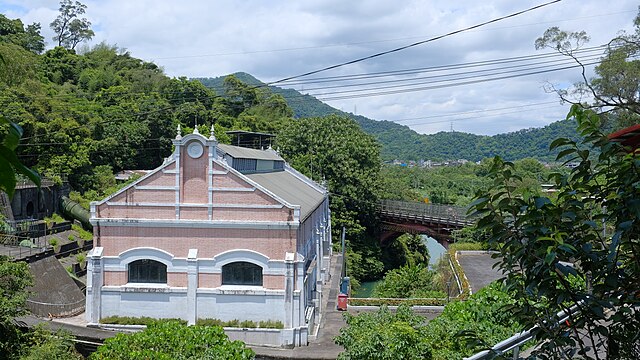
Streamflow prediction for smallscale hydropower plants
Publications
- 26 publications found
Roksvåg, Thea Julie Thømt; Vandeskog, Silius Mortensønn; Wulff, C. Ole and Wergeland, Kamilla Klock. (2026).
An LSTM network for joint modeling of streamflow and hydropower generation for run-of-river plants.
Show summary
We propose a Long Short-Term Memory (LSTM) network to estimate historical daily streamflow and hydropower generation in Norway, with particular focus on run-of-river (ROR) plants. Historical records from such plants are often limited, and typically only contain hydropower generation data, which are truncated at the plants’ capacity limits and therefore do not capture high-flow conditions. The proposed LSTM model improves predictions in data-sparse and ungauged catchments, and for high-flow conditions, by learning from both hydropower generation data from ROR plants and streamflow data from other Norwegian catchments. Our model builds upon the neuralhydrology package, by adding a component that transforms streamflow into hydropower generation before loss calculations. The model is trained using streamflow and hydropower generation data from 190 Norwegian catchments and 136 ROR plants, with precipitation, temperature and catchment attributes as input variables. The LSTM model outperforms more traditional hydrological models for predictions in both gauged and ungauged catchments. Furthermore, the combined LSTM model yields hydropower generation estimates that are comparable to or better than those from a model trained only on hydropower generation data, while producing considerably better streamflow estimates. Our approach highlights the added value of additional data sources for hydrological modeling for both local calibration and the task of regionalization, and demonstrates that data-driven methods are suitable for leveraging their potential.
Cunen, Celine Marie Løken; Roksvåg, Thea Julie Thømt; Heinrich-Mertsching, Claudio Constantin and Lenkoski, Frank Alexander. (2026).
Combining predictive distributions for time-to-event outcomes in meteorology.
Show summary
Combining forecasts from multiple numerical weather prediction (NWP) models has shown substantial benefit over the use of individual forecast products. Although combination, in a broad sense, is widely used in meteorological forecasting, systematic studies of combination methodology in meteorology are scarce. In this article, we study several combination methods, both state-of-the-art and of our own making, with a particular emphasis on situations where one seeks to predict when a particular event of interest will occur. Such time-to-event forecasts require particular methodology and care. We conduct a careful comparison of the different combination methods through an extensive simulation study, where we investigate the conditions under which the combined forecast will outperform the individual forecasting products. Further, we investigate the performance of the methods in a case study modelling the time to the first hard freeze in Norway and parts of Fennoscandia.
Scheuerer, Michael; Byermoen, Emilie; Oliveira, Julia Ribeiro De; Roksvåg, Thea Julie Thømt and Vikhamar-Schuler, Dagrun. (2025).
Multi-decadal streamflow projections for catchments in Brazil based on CMIP6 multi-model simulations and neural network embeddings for linear regression models.
Show summary
A linear regression model is developed to link anomalies of streamflow to anomalies of precipitation amounts and temperature with the goal of making multi-decadal streamflow projections based on CMIP6 multi-model simulations. Regression coefficients estimated separately for each catchment and each month show physically implausible spatial patterns and indicate issues with overfitting. An alternative approach is therefore explored in which all regression coefficients are estimated simultaneously through a neural network that retains the original linear model structure, but uses embeddings to map each combination of catchment and month to a set of regression coefficients. The model is demonstrated over a set of catchments in Brazil, where the estimated relationships are used to make streamflow projections for the next decades based on CMIP6 multi-model simulations. It yields physically more plausible relationships between streamflow, precipitation amounts, and temperature for our study area than the locally fitted regression models. The resulting projections indicate reduced streamflow over northern, north-eastern, central, and south-eastern Brazil, especially for the austral spring and summer season. The signal is less clear during austral winter. In southern Brazil, an increase in streamflow is expected.
Vandeskog, Silius Mortensønn; Wergeland, Kamilla; Roksvåg, Thea Julie Thømt and Wulff, C. Ole. (2025).
Predicting streamflow and hydropower production with Long Short Term Memory models. Norsk hydrologiråd, Statkraft, Meteorologisk institutt
Nordtorp, Henrik; Roksvåg, Thea Julie Thømt and Thorarinsdottir, Thordis Linda. (2024).
Widespread Risk of Extreme Precipitation and Flooding.
Show summary
Developing a thorough understanding of the prevalence of natural disasters such as floods and extreme precipitation events is of high importance for the society. In this report, it is attempted to investigate and quantify the widespread risk of flood and extreme precipitation events, using statistical methods on historical flood and precipitation data from southern Norway. The use of descriptive methods and clustering revealed patterns in the geographical spread of extreme events, in-line with current process understandings from hydrology and meteorology.
Lutz, Julia; Roksvåg, Thea Julie Thømt; Dyrrdal, Anita Verpe; Lussana, Cristian and Thorarinsdottir, Thordis Linda. (2024).
Areal reduction factors from gridded data products.
Show summary
Areal reduction factors (ARFs) convert a point estimate of extreme precipitation to an estimate of extreme precipitation over a spatial domain, and are commonly used in flood risk estimation. The fixed-area approach to ARF estimation considers an area of a certain size and constructs the ratio of extremes with the same exceedance probability for areal average precipitation and point precipitation at a representative location. In regions with sparse observation networks, estimates of areal average precipitation are highly uncertain if based on rain gauge data only. We construct and compare regional and seasonal ARF estimates for Norway using different gridded data products, both observation-based products (SURFdat, seNorge) and reanalysis products (NORA3). For data products that cover a sufficiently long time period, the extremes are estimated using the generalised extreme value (GEV) distribution, while the metastatistical extreme value (MEV) formulation is applied to data products with short records. The results indicate that the NORA3 reanalysis, available at a temporal resolution of 1 h and a spatial resolution of 3 km, provides a good overall adequacy for the purpose of obtaining robust and reliable ARF estimates.
Roksvåg, Thea Julie Thømt; Lutz, Julia; Dyrrdal, Anita Verpe; Lussana, Cristian and Thorarinsdottir, Thordis. (2023).
Estimating extreme areal precipitation from gridded data products. Bocconi University
NVA
Poster
Lutz, Julia; Grinde, Lars; Dyrrdal, Anita Verpe; Roksvåg, Thea and Thorarinsdottir, Thordis Linda. (2022).
Estimating consistent rainfall design values for Norway using Bayesian inference and post-processing of posterior quantiles. European Meteorological Society
NVA
Scientific lecture
Thorarinsdottir, Thordis Linda; Roksvåg, Thea Julie Thømt and Eikvil, Line. (2022).
Birdcam: Automatic monitoring of birds near wind parks.
NVA
Report
Roksvåg, Thea and Haug, Ola. (2022).
Presentasjon av Climate Futures. Avfallsforsk
NVA
Scientific lecture
Show summary
Presentasjon av Climate Futures, samt lede diskusjon/gruppearbeid rundt hvordan vær og klima påvirker avfallssektoren.
Roksvåg, Thea; Lenkoski, Alex; Scheuerer, Michael; Heinrich, Claudio Constantin and Thorarinsdottir, Thordis Linda. (2022).
Probabilistic prediction of the time to hard freeze using seasonal weather forecasts and survival time methods. European Geosciences Union (EGU)
NVA
Scientific lecture
Roksvåg, Thea; Lenkoski, Alex; Scheuerer, Michael; Heinrich, Claudio Constantin and Thorarinsdottir, Thordis Linda. (2022).
Probabilistic prediction of the time to hard freeze using seasonal weather forecasts and survival time methods.
Show summary
Agricultural food production and natural ecological systems depend on a range of seasonal climate indicators that describe seasonal patterns in climatological conditions. This article proposes a probabilistic forecasting framework for predicting the end of the freeze-free season, or the time to a mean daily near-surface air temperature below 0°C (referred to here as hard freeze). The forecasting framework is based on the multimodel seasonal forecast ensemble provided by the Copernicus Climate Data Store and uses techniques from survival analysis for time-to-event data. The original mean daily temperature forecasts are statistically postprocessed and downscaled with a mean and variance correction of each model system before the time-to-event forecast is constructed. In a case study for a region in Fennoscandia covering Norway for the period 1993–2020, the proposed forecasts are found to outperform a climatology forecast from an observation-based data product at locations where the average predicted time to hard freeze is less than 40 days after the initialization date of the forecast on October 1.
Roksvåg, Thea; Scheuerer, Michael; Heinrich, Claudio Constantin; Thorarinsdottir, Thordis Linda and Lenkoski, Alex. (2022).
Probabilistic prediction of the time to hard freeze using seasonal weather forecasts and survival time methods. Bjerknessenteret
NVA
Lecture
Thorarinsdottir, Thordis Linda; Solberg, Rune; Lenkoski, Alex and Roksvåg, Thea. (2022).
Potensialet i data. -
NVA
Lecture
Thorarinsdottir, Thordis Linda; Roksvåg, Thea; Engeland, Kolbjørn; Barna, Danielle Marie; Xu, Chong-Yu; Lutz, Julia; Dyrrdal, Anita Verpe and Grinde, Lars. (2022).
Consistent estimation of extreme precipitation and flooding across multiple durations.
NVA
Scientific lecture
Thorarinsdottir, Thordis Linda; Barna, Danielle Marie; Roksvåg, Thea; Engeland, Kolbjørn; Xu, Chong-Yu; Lutz, Julia; Dyrrdal, Anita Verpe and Grinde, Lars. (2022).
Consistent estimation of extreme precipitation and flooding across multiple durations. BIRS
NVA
Scientific lecture
Hempel, Manuel; Hovland, Ellen-Margrethe; Hellton, Kristoffer Herland and Roksvåg, Thea. (2022).
Vær- og klimaprognoser for framtidas grøntproduksjon. Gartnerhallen
NVA
Scientific lecture
Thorarinsdottir, Thordis Linda; Roksvåg, Thea; Lutz, Julia; Grinde, Lars and Dyrrdal, Anita Verpe. (2022).
A Bayesian framework to derive consistent intensity-duration-frequency curves from multiple data sources.
NVA
Scientific lecture
Roksvåg, Thea; Scheuerer, Michael; Lenkoski, Alex; Heinrich, Claudio Constantin and Thorarinsdottir, Thordis Linda. (2022).
Prediction of the time to hard freeze using seasonal weather forecasts and survival time methods. NORCE
NVA
Lecture
Roksvåg, Thea; Steinsland, Ingelin and Engeland, Kolbjørn. (2022).
A geostatistical spatially varying coefficient model for mean annual runoff that incorporates process-based simulations and short records.
Show summary
We present a Bayesian geostatistical model for mean annual runoff that incorporates simulations from a process-based hydrological model. The simulations are treated as a covariate and the regression coefficient is modeled as a spatial field. This way the relationship between the covariate (simulations from a hydrological model) and the response variable (observed mean annual runoff) can vary in the study area. A preprocessing step for including short records in the modeling is also suggested. We thus obtain a model that can exploit several data sources. By using state-of-the-art statistical methods, fast inference is achieved. The geostatistical model is evaluated by estimating mean annual runoff for the period 1981–2010 for 127 catchments in Norway based on observations from 411 catchments. Simulations from the process-based HBV model on a 1×1 km grid are used as input. We found that on average the proposed approach outperformed a purely process-based approach (HBV) when predicting runoff for ungauged and partially gauged catchments. The reduction in RMSE compared to the HBV model was 20 % for ungauged catchments and 58 % for partially gauged catchments, where the latter is due to the preprocessing step. For ungauged catchments the proposed framework also outperformed a purely geostatistical method with a 10 % reduction in RMSE compared to the geostatistical method. For partially gauged catchments, however, purely geostatistical methods performed equally well or slightly better than the proposed combination approach. In general, we expect the proposed approach to outperform geostatistics in areas where the data availability is low to moderate.
Nilsen, Irene Brox; Dyrrdal, Anita Verpe; Roksvåg, Thea; Lutz, Julia and Engeland, Kolbjørn. (2022).
Styrtregn og styrtflom: Hvordan kan vi unngå skader?
Show summary
Samfunnet er sårbart for ekstremnedbør og flom, som vi har sett blant annet i Tyskland sommeren 2021 og i Oslo i 2019. En spesielt kraftig regnhendelse som har fått lite oppmerksomhet fordi den ikke traff tettbygd strøk, var Fulufjället i august 1997. I denne teksten tar vi utgangspunkt i kraftige nedbørhendelser og beskriver noen av utfordringene ved å unngå skader på infrastruktur og bygninger. Vi beskriver særlig hvordan vi kan beregne riktig dimensjonerende regn og dimensjonerende flom, særlig i områder der det ikke finnes målinger av kraftig nedbør, eller der måleseriene er korte. Her beskriver vi hvordan begrensninger i datagrunnlaget slår ut på gjentaksintervallet. For en kommune eller infrastruktureier er det også av interesse å utvide perspektivet fra punktvise beregninger til å finne ut hvor ofte et areal eller en strekning vil kunne oppleve en tohundreårsflom.
Roksvåg, Thea; Lutz, Julia; Grinde, Lars; Dyrrdal, Anita Verpe and Thorarinsdottir, Thordis Linda. (2021).
New methods for making consistent IDF curves for Norway. NVE
NVA
Lecture
Roksvåg, Thea; Lutz, Julia; Grinde, Lars; Dyrrdal, Anita Verpe and Thorarinsdottir, Thordis Linda. (2021).
Consistent intensity-duration-frequency curves by post-processing of estimated Bayesian posterior quantiles.
Show summary
As a warming climate leads to more frequent heavy rainfall, the importance of accurate rainfall statistics is increasing. Rainfall statistics are often presented as intensity-duration-frequency (IDF) curves showing the rainfall intensity (return level) that can be expected at a location for a duration, and the frequency of this intensity (return period). IDF curves are commonly constructed by fitting generalized extreme value (GEV) distributions to observed annual maximum rainfall for several target durations. As the estimation is performed independently across durations, the resulting IDF curves may be inconsistent across durations and return periods. This paper proposes to ensure consistency by post-processing the estimated IDF curves. Two post-processing approaches are considered, a quantile selection algorithm that searches for consistent return levels within the posterior quantiles of a Bayesian inference approach, and adjustments based on isotonic regression. The methods are evaluated for simulated data and for Norwegian rainfall data from 83 locations, for hourly and sub-hourly durations. The post-processing yields consistent estimates that are at least as accurate as the unadjusted, inconsistent estimates. We also demonstrate how our approach differs from d-GEV, a method that performs simultaneous estimation across durations. An R implementation for the post-processing methods is available at https://github.com/ClimDesign/fixIDF.
Roksvåg, Thea; Lutz, Julia; Grinde, Lars; Dyrrdal, Anita Verpe and Thorarinsdottir, Thordis Linda. (2021).
Consistent Intensity-Duration-Frequency curves by post-processing of estimated Bayesian posterior quantiles. Norwegian Hydrological Council
NVA
Scientific lecture
Roksvåg, Thea; Steinsland, Ingelin and Engeland, Kolbjørn. (2021).
Estimating mean annual runoff by using a geostatistical spatially varying coefficient model that incorporates process-based simulations and short records.
NVA
Scientific lecture
Roksvåg, Thea and Thorarinsdottir, Thordis Linda. (2021).
Prediksjon av lavvann ved Åbjøra.
NVA
Report