
Senior Research Scientist
Sinan S. Tanilkan
- Department Applied research in information and communication technology
- Phone number +47 22 85 25 75
- E-mail sinan@nr.stage.dekodes.no
Projects

- Digital transformation
AI-based scenario management for cyber range training (ASCERT)
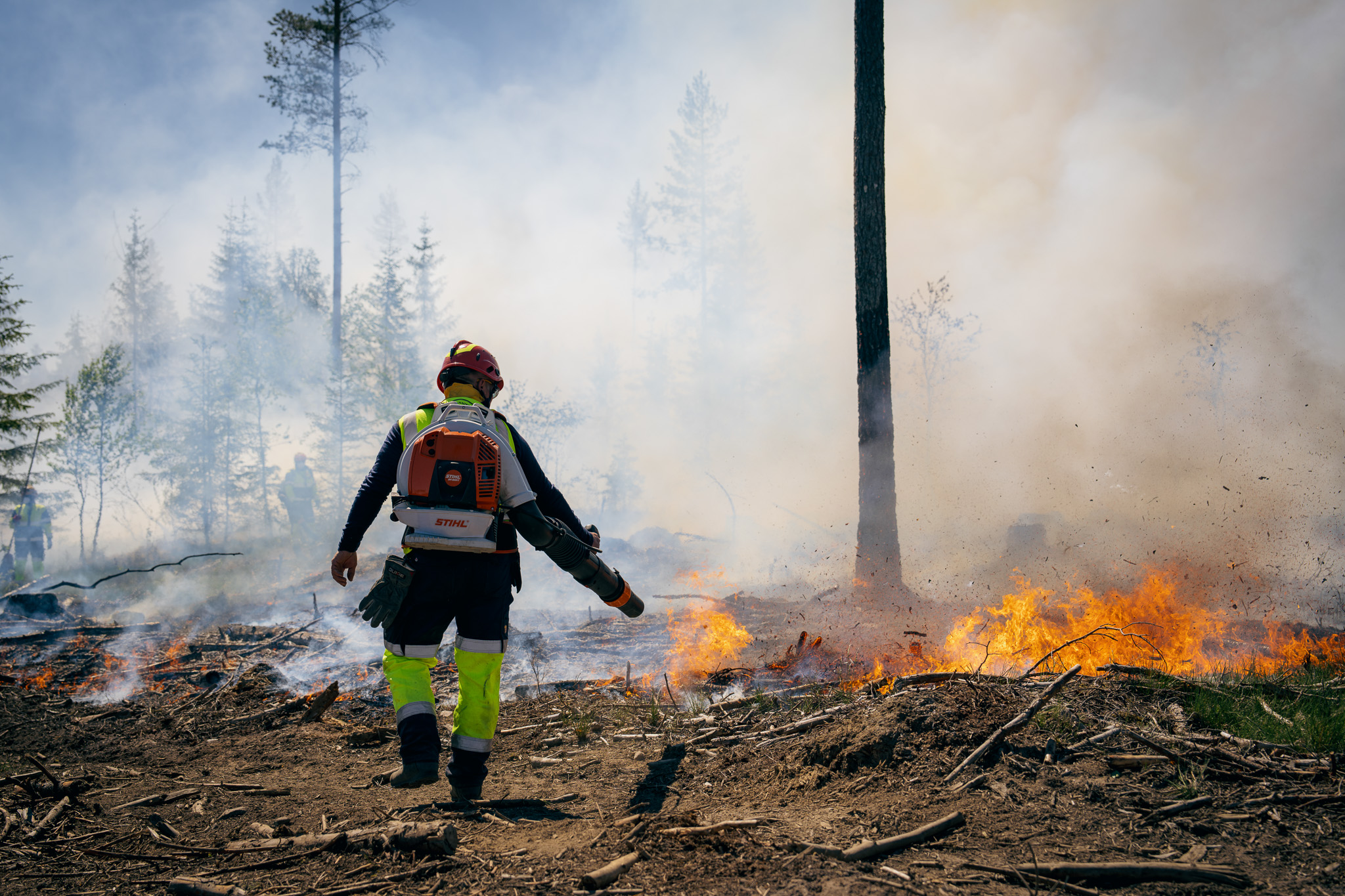
Improving resource sharing in fire and rescue services (BRACE)
Publications
- 9 publications found
Spremic, Mina; Kolstø, Johannes Voll; Aarnes, Ingrid; Arntzen, Alexander Johan and Tanilkan, Sinan. (2026).
Naturfaremodellering for økt beredskapssamarbeid i brann- og redningstjenestene. Vestlandsforskning, Noradapt, Høgskulen på Vestlandet, NORCE, Klimapartnere, KS, Kartverket, Vestland fylkeskommune, Statsforvalteren i Vestland
NVA
Scientific lecture
Show summary
Det er i dag 193 brann- og redningsvesen som dekker den lokale grunnberedskapen i hele Norge. Disse er dimensjonert etter kommunenes risiko- og beredskapsanalyser ved dagens forhold. Samtidig forventes det at klimaendringene vil gi nye utfordringer: lange tørkeperioder kan føre til store og samtidige skogbranner, slik som vi så i tørkesommeren 2018. Våtere og villere klima gir likeledes økende fare for kraftig vind, flom og skred. Å skalere opp hvert enkelt brannvesen til å kunne håndtere et slikt risikobilde vil være kostnadskrevende, og for de mange små kommunale brannvesen en lite hensiktsmessig måte å møte utfordringene på.
BRACE-prosjektet har som hensikt å ta tak i disse utfordringene og utvikle et praktisk, datadrevet rammeverk for samhandling om deling av ressurser ved store og samtidige hendelser. Dette rammeverket skal 1) gi bedre situasjonsforståelse ved å bruke lokale data om risiko, 2) fastsette ressursbehov basert på risiko for mer treffsikker daglig planlegging og 3) sikre en rettferdig og objektiv fordeling av ressurser i krisesituasjoner gjennom kvalitativ analyse av hva som kjennetegner vellykket ressursdeling. I prosjektet har vi valgt å fokusere spesielt på skogbrann og skred.
Her presenterer vi vårt arbeid med å skape en nasjonalt dekkende risikomodell for skogbrann som hensyntar lokale forhold som kan ha betydning for antennelsesfare. Vi tar utgangspunkt i dagens skogbrannfarekart produsert av MET, som igjen bygger på toppen av Canadian Fire Weather Index (FWI) og kan si noe om hvilke værforhold som påvirker skogbrannfaren. Denne modellen kobles så med en database av utrykninger til brann i kategoriene «skog/utmark» og «gress/innmark». Disse historiske hendelsene vil være med på å si noe om betydningen av andre lokale forhold som vegetasjon og befolkningstetthet eller andre datakilder som kan være av betydning for antennelsesfare.
Aarnes, Ingrid and Tanilkan, Sinan. (2026).
Datadrevet felles situasjonsforståelse for ressursdeling i brannvesenet ved kriser. Kartverket
NVA
Scientific lecture
Show summary
BRACE - et praktisk, datadrevet rammeverk for samhandling om deling av ressurser ved store og samtidige hendelser.
Knutsen, Leif; Hannay, Jo and Tanilkan, Sinan. (2025).
Exploring agile practice adoption: A survey in the Norwegian public sector.
Show summary
The uptake of practices labeled as "agile" is a topic of widespread discussion in research and practitioner communities. Within the broad topic of agility, there are discussions about the separation between agility in what one might call traditional software development, agility in the form of product orientation, and agility as expressed in continuous delivery. Although particular cases have been studied, the magnitude and manner of adoption and use of agile practices under these three themes remain unclear. We therefore sought to test hypotheses about their growth, prevalence, and implementation patterns in the Norwegian public sector. Aiming to form a comprehensive picture, we distributed surveys three years apart to IT executives at all Norwegian public institutions likely to build digital solutions. The results supported the view that agile practices are prevalent, but gave mixed support for their increase in use. We found no support for the view that agility in, respectively, software development, product orientation, and continuous delivery are treated as distinct disciplines in practice. We were also unable to identify other patterns in implementing these practices. The adoption of agile appears to be enabled primarily by commitment at the team and individual levels and inhibited by factors specific to the public sector. These findings should be compared with other sectors and countries. We propose issues for (a) further research on the scope of agile practices, (b) better indicators for adoption, (c) interaction among agile practices, and (d) factors that enable or inhibit the adoption of agile practices.
Kroknes, Monica; Tanilkan, Sinan; Hannay, Jo Erskine and Schulz, Trenton. (2025).
Simulations for Optimizing Patient Transfer Between Hospital and Nursing Home.
Show summary
Collaboration skills are important in most professions, but are not straightforward to enhance. In the healthcare sector, collaboration is key to safe patient care, with potentially severe adverse effects when failing. Although these effects are well documented, the healthcare profession is struggling to amend collaboration failures. We designed and developed simulation-based training for a situation well-known for collaboration break-down; namely, the patient transfer between the hospital and the nursing home. We used stakeholder analysis to elicit pain points in the transfer from various stakeholder’s perspectives and elaborated vignettes around the pain points using transition diagrams. We then implemented a selection of the vignettes in a role-playing tool and administered the sequence of vignettes as a simulation scenario to nurses and hospital personnel as a first validation of the vignettes. The purpose of the simulation is two-fold: The simulation can be used to focus on, and discuss, the transfer process itself, and it can be used to train healthcare personnel in the transfer process. Participant feedback relating to the former includes the importance of clear messaging for understanding each other’s needs, the possibility of future organizational learning based on the simulation, and the conditional appropriateness of read-backs in communication. Participant feedback on the latter; i.e., training effects, includes improved inter-organizational understanding, less time on extraneous information requests and responses, and hence more time for patient attendance.
Knutsen, Leif Z.; Patón-Romero, Jose David; Hannay, Jo Erskine and Tanilkan, Sinan Sigurd. (2024).
A Survey on the Perception of Opportunities and Limitations of Generative AI in the Public Sector.
Show summary
Recent breakthroughs in Artificial Intelligence (AI) have increased the interest in applications of AI in general and Generative AI in particular. This interest is manifested in public debate on the promise and limitations of AI in various sectors, but also on the risks of relying upon such technology. However, little is known about the interest in and perceptions of Generative AI among Information Technology (IT) professionals likely to take responsibility for developing and implementing AI-based solutions in the public sector. We present findings from a survey we developed (with help from ChatGPT) and conducted among IT practitioners in the Norwegian public sector. Through this survey, we investigated how opportunities and limitations of the use Generative AI were perceived and understood. We found ambivalent attitudes: while the interest in Generative AI is high, the level of perceived knowledge is low; there is considerable optimism about the value of AI, but an equivalent level of concern about threats this technology represents; and although respondents suspected AI had helped generate the survey, they found the survey questions relevant and fully context-oriented. These findings provide background and context for further research into the adoption of AI and help practitioners establish a baseline for efforts to build and manage AI-based solutions in public institutions.
Tanilkan, Sinan Sigurd and Hannay, Jo Erskine. (2024).
Project Smells for Early Detection of Problems with Benefits Realization.
Show summary
Although substantial research has provided guidance on how to identify and manage the benefits of new software solutions, ensuring the realization of those benefits remains a challenge. Inspired by the notion of code smells for software quality, we develop a concept of project smells for benefits realization. We conducted 22 in-depth interviews with participants in nine public-sector digitalization projects, and elicited seven project smells: 1. Dilemma between enthusiasm and formality, 2. Situational differences, 3. Resistance to realization, 4. Slipping opportunities, 5. Loss of focus due to project size, 6. Lacking commitment, 7 Insufficient contact with recipients. We argue that these project smells are a complement to traditional project metrics which focus on time, cost and scope, or the evaluation of benefits after a project is finished. Each smell comes with a set of questions intended to help practitioners identify the odour of their projects. The intention is that project smells can function as low-cost, early indicators helping practitioners adjust work readily and rapidly to ensure benefits realization of their software development investments, thereby focusing actively on the project’s product, rather than myopically on the project itself.
Knutsen, Leif Z.; Ngereja, Bertha; Bjaaland, Ingebjørg Flaata; Hannay, Jo Erskine and Tanilkan, Sinan Sigurd. (2024).
A Survey on Perceptions of Data Sharing in the Norwegian Public Sector.
Show summary
Sharing data among public institutions is essential for reaping the benefits of data-driven capabilities. Literature to date has identified several types of benefits that are likely to accrue to a wide range of sectors, as well as challenges and obstacles to implementing data-sharing solutions. We sought to identify perceptions of possible benefits, likely challenges, and the likelihood of overcoming them in the Norwegian public sector. Our survey of IT practitioners interested in the subject suggests that optimism about data sharing is high, concerns about a wide range of challenges are also high, and confidence in public institutions is tenuous. Responses also suggest that divisional management may be critical in implementing data sharing solutions. The pattern of responses suggests uncertainty consistent with low maturity in the field. We posit that data sharing among public institutions is part of a broader set of capabilities needed for public service innovation across institutions.
Hannay, Jo Erskine; Tanilkan, Sinan Sigurd; Schulz, Trenton and Hansen, Natalia Isabella. (2024).
The Co-design of Simulation-Based Training for Collaboration Between Healthcare Services.
Show summary
As part of developing simulation-based training for better collaboration between healthcare services, we developed instruments for measuring key teamwork constructs role understanding (responsibility), trust, communication and collaboration as experienced during simulation-based training in virtual reality. We co-designed these instruments together with healthcare workers and healthcare students in three workshops and a survey. We followed a method for generating unidimensional Thurstone scales with equal-appearing intervals. We then used the instruments in training sessions with healthcare students. We gathered feedback on the simulation and conducted initial analyses on the instrument data. Results are encouraging for the simulation design, but with clear points for improvement. The preliminary analyses from the instruments indicate that they seem to measure the intended constructs as perceived by the training audience. Correlational analyses indicate relationships between these constructs, particularly highlighting the challenge of balancing responsibility with trust and collaboration. Findings advocate the potential in our approach to mirror realistically, and improve, collaborative practices among healthcare professionals.