
Senior Research Scientist
Ola Haug
- Department Statistical modelling and machine learning
- Phone number +47 22 85 26 91
- E-mail ola@nr.stage.dekodes.no
Projects

- Statistical modelling
Climate-sensitive risk modelling for water damage in buildings
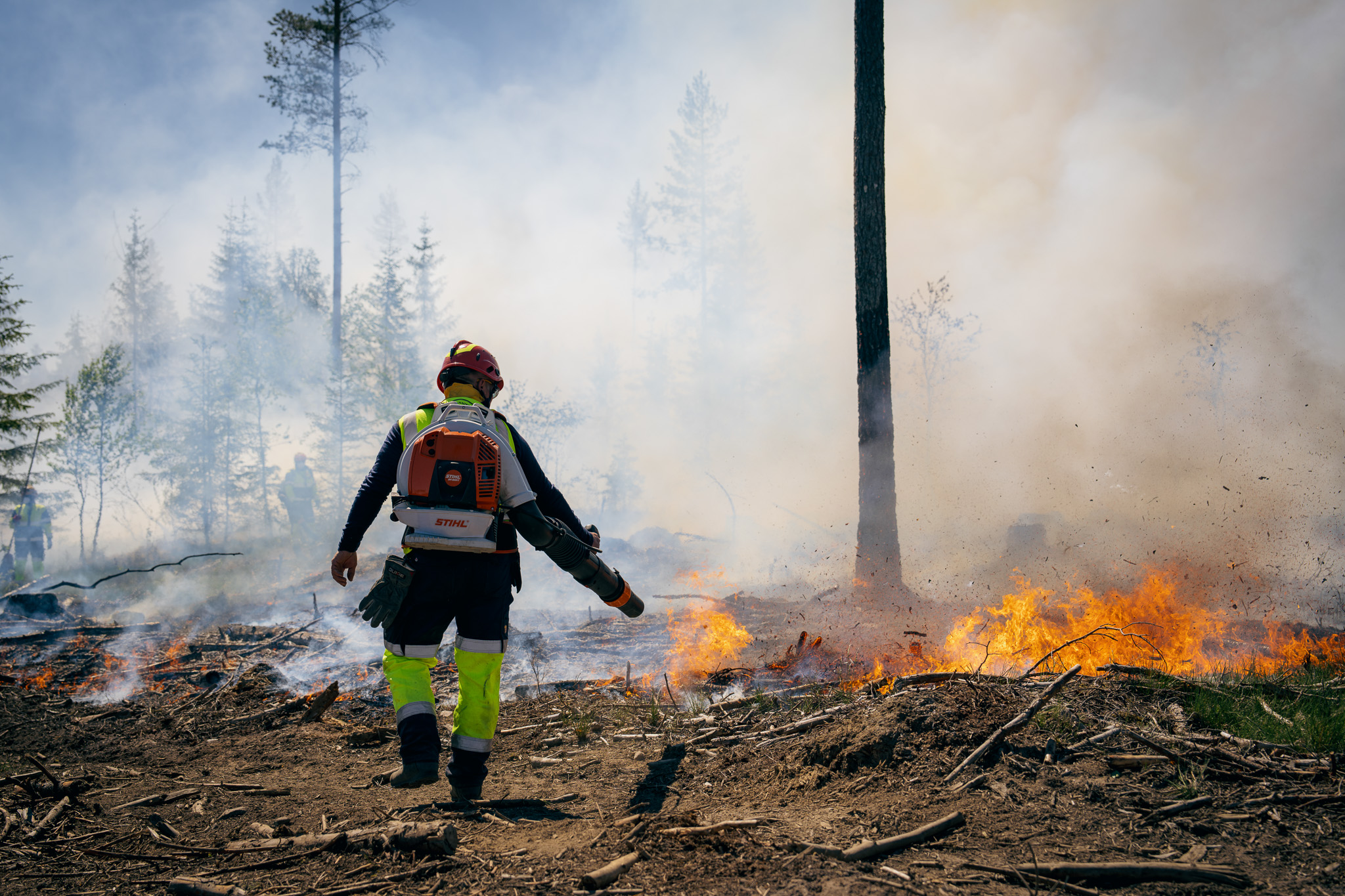
Improving resource sharing in fire and rescue services (BRACE)
Publications
- 136 publications found
Haug, Ola and Kolstø, Johannes Voll. (2026).
Fremtidens skader etter overvannsflom i Norge. Gjensidiges bærekraftsavdeling
NVA
Lecture
Kolstø, Johannes Voll; Vandeskog, Silius Mortensønn and Haug, Ola. (2026).
Risikomodell for totalt skadebeløp etter overvannsflom for bygninger i Norge.
NVA
Report
Haug, Ola; Kolstø, Johannes Voll and Vandeskog, Silius Mortensønn. (2026).
Beregning av framtidige skadekostnader etter overvannsflom for bygninger i Norge. Vestland fylkeskommune, Statsforvaltaren i Vestland, Høgskulen på Vestlandet, Norsk senter for berekraftig klimatilpassing, Vestlandsforsking, Klimapartnere, Kommunenes Sentralforbund, Kartverket, NORCE, Norsk Bremuseum
NVA
Scientific lecture
Kolstø, Johannes Voll; Vandeskog, Silius Mortensønn and Haug, Ola. (2026).
Framtidige skadebeløp etter overvannsflom for bygninger i Norge.
Show summary
Norsk Regnesentral har etablert en statistisk risikomodell for vannskader etter overvannsflom på bygninger i Norge. Modellen kobler forsikringsdata fra Gjensidige sammen med nedbørdata fra seNorge og annen lokal eksponeringsinformasjon. Vi finner at risikoen for vannskader lar seg beskrive gjennom sesongvise mål på mengde kraftig nedbør og avvik fra typisk kraftig nedbør. Kombinert med klimaframskrivninger levert av Norsk Klimaservicesenter simulerer modellen forventede endringer i skadebeløp fra referanseperioden 1991–2020 til to framtidige scenarioperioder under et lavt, middels og høyt utslippsscenario for CO2. På nasjonalt nivå antyder simuleringene en økning på opptil 33 % fram mot slutten av århundret. Skadeframskrivningene er følsomme for variabiliteten i klimaframskrivningene, og vi anbefaler å utvise forsiktighet med bruk av lave og høye kvantiler av endringene i skadebeløp på kommune- og fylkesnivå.
Haug, Ola; Dæhlen, Ingrid; Aldrin, Magne Tommy and Aamodt, Randi Margrethe. (2025).
Environmental Risk Analysis of Nordre Follo Municipality's Sewage System Using Multivariate Statistical Analysis. Norsk Vann
NVA
Scientific lecture
Show summary
Environmental risk analyses of sewage systems shall be an integrated part of municipalities’ master plan for wastewater and storm water, as well as applications for permission of outlet to the State Governor. Such analyses are often performed in a manual and ad hoc, yet time-consuming way. Such simplified analyses typically include relatively few pipes, and the probability for different risk categories are often provided as crude estimates only. This approach does not at all harvest the full potential of connections and explanatory power that is contained in all the data available from the pipe system and the environment in combination.
In this project, we develop a statistical framework that calculates environmental risk for 6200 sewage pipes based on data available for the municipality. The data set comprises three major sources:
1) Data from the professional VA wiring network system Gemini VA. This data set holds information on the geographical position of pipes, their age, material, diameter and slope, along with a history of maintenance and failures.
2) Data obtained from simulations of the sewage system in the hydraulic-hydrological software tool MIKE+. We perform model simulations for different precipitation events and prolonged dry weather periods. From these simulations we obtain for each pipe values of importance to pollution risk, for example: Overload, pressure, maximum and minimum water flow.
3) Data from environmental monitoring of the storm water system and urban streams in dry as well as wet weather. We measure six parameters: E.coli, total phosphorus, ortophosphate or total reactive phosphorus, total nitrogen, nitrate and ammonia in 400 manholes and stream monitoring locations. These data, called “weather pollution”, are assigned to the closest upstream sewage pipe, which also incorporates system information representative of the total upstream exposure.
The analysis produces three main results:
1) Model simulation of a base risk value for each sewage pipe in dry weather or prolonged dry weather periods. The main risk is accumulation of sewage.
2) Calculation of a risk value for each pipe during overflow. The calculations are performed for different weather exposures represented via local precipitation intensity, duration and frequency (IDF) values for selected return periods.
3) Prediction of a “dry weather pollution” base risk value for pipes that have no monitored values, based on feeding their properties to the statistical framework.
Most municipalities monitor their streams and lakes through the water areas, and many perform source tracking in the storm water system. If, in addition, a calibrated hydraulic-hydrological model of the sewage system is available, the suggested methodology can provide a more comprehensive analysis which is also more efficient.
Haug, Ola. (2025).
Vannskader på bygninger - risikomodeller utviklet for Gjensidige. Ekspertutvalget om klimatilpasning
NVA
Lecture
Haug, Ola; Kolstø, Johannes Voll and Heinrich-Mertsching, Claudio. (2024).
Risikomodell for styrtregnskader - prediksjoner knyttet til ekstremværhendelser i august 2023. Gjensidige Skade
NVA
Lecture
Haug, Ola. (2024).
Beregning av vannskader for beredskapsformål. NGI - Norges Geotekniske Institutt, NR - Norsk Regnesentral
NVA
Lecture
Aarnes, Ingrid; Hauge, Ragnar; Trier, Øivind Due; Haug, Ola and Vazquez, Ariel Almendral. (2024).
Hierarkisk modell for naturtyper til bruk i naturregnskap.
NVA
Report
Aarnes, Ingrid and Haug, Ola. (2024).
VARSKU - Underground effects associated with flooding, landslide and avalanche risk.
NVA
Report
Christensen, Dennis; Haug, Ola; Kunimitsu, Taro; Kolstø, Johannes Voll and Lenkoski, Alex. (2024).
Climate Hazards and Collateral Value: A Survey of Recent Literature.
NVA
Report
Rognebakke, Hanne Therese Wist; Haug, Ola and Aldrin, Magne Tommy. (2024).
Statistical model of incomplete automated passenger counts (APC) in public transport. Transport for London
NVA
Lecture
Haug, Ola; Kolstø, Johannes Voll and Heinrich-Mertsching, Claudio. (2024).
Risikomodell for vannskader på bygninger knyttet til styrtregn.
NVA
Lecture
Kolstø, Johannes Voll; Heinrich-Mertsching, Claudio and Haug, Ola. (2024).
Modelling pluvial water damage risk using daily and sub-daily extreme rainfall.
NVA
Report
Haug, Ola; Heinrich-Mertsching, Claudio Constantin and Thorarinsdottir, Thordis. (2023).
Assessing risk of water damage to buildings under current and future climates. ESReDA and JRC Ispra
NVA
Scientific lecture
Show summary
https://publications.jrc.ec.europa.eu/repository/handle/JRC139101
Wahl, Jens Christian; Heinrich-Mertsching, Claudio Constantin; Liu, Izzie Yi; Thorarinsdottir, Thordis and Haug, Ola. (2023).
Gjensidige Denmark: Water damage risk model and preliminary analysis of storm damages.
NVA
Report
Haug, Ola and Heinrich-Mertsching, Claudio Constantin. (2023).
Modelling building water damage risk in a changing climate. Gjensidige
NVA
Lecture
Heinrich-Mertsching, Claudio Constantin; Wahl, Jens Christian; Ordonez, Alba; Stien, Marita; Elvsborg, John; Haug, Ola and Thorarinsdottir, Thordis Linda. (2023).
Assessing present and future risk of water damage using building attributes, meteorology, and topography.
Løland, Anders; Haug, Ola and Elvsborg, John. (2023).
Hvordan endres risikoen for forsikringsskader når klimaet endrer seg?
NVA
Program participation
Haug, Ola. (2023).
Assessing building water damage risk under climate change. Tryg Forsikring
NVA
Lecture
Haug, Ola and Løland, Anders. (2023).
A reuse system for bottles - trip rate calculations under model replacement.
Show summary
The back to market trip rate is a key performance indicator of a bottle reuse system. In this study we investigate the impact of model replacement on the trip rate, incorporating also other loss mechanisms: incomplete deposit, damage or pollution, and scuffing. We find that for representative market parameter values, the overall trip rate is significantly reduced from introducing the scuffing and model replacement components into a system originally comprising the deposit and damage loss processes only, with figures in the range 36% - 57% for PET bottles, and 32% - 64% for glass bottles. The effect increases for shorter model design lifetimes.
Haug, Ola. (2022).
Assessing building water damage risk - using building attributes, meteorology and topography. Den Norske Aktuarforening v/fagkomité Skade
NVA
Lecture
Parviero, Riccardo; Hellton, Kristoffer Herland; Haug, Ola; Engø-Monsen, Kenth; Rognebakke, Hanne Therese Wist; Canright, Geoffrey; Frigessi, Arnoldo and Scheel, Ida. (2022).
An agent-based model with social interactions for scalable probabilistic prediction of performance of a new product.
Show summary
Understanding the spreading process of new products provides valuable knowledge that can be used for effective marketing. The ability to make early prediction of success or failure is a great advantage in innovation processes. Extending current literature in a novel way, we propose a data-driven agent-based methodology that accomplishes this task. Inference and predictions are based on short-time observations of the product adoption history and knowledge of the social network of consumers. We model and predict adoptions at the agent level as driven by unobserved peer-to-peer influence and external factors such as marketing. The method compares interaction between consumers and general campaigns, and quantifies the importance of characteristics of customers and their social relations. Our computationally efficient method is demonstrated by analyzing real data, predicting the process far into the future using data from a short period after launch, and validated by simulation experiments on a true full-scale communication network.
Roksvåg, Thea and Haug, Ola. (2022).
Presentasjon av Climate Futures. Avfallsforsk
NVA
Scientific lecture
Show summary
Presentasjon av Climate Futures, samt lede diskusjon/gruppearbeid rundt hvordan vær og klima påvirker avfallssektoren.
Haug, Ola. (2022).
Assessing probabilities and impacts of extreme events for the needs of insurance under climate change. Community of European Research and Innovation for Security (CERIS)
NVA
Lecture
Haug, Ola and Aldrin, Magne. (2022).
Ny metodikk for ÅDT-belegging av vegnettet – med tilleggskriterier.
NVA
Report
Hellton, Kristoffer Herland; Tveten, Martin; Stakkeland, Morten; Engebretsen, Solveig; Haug, Ola and Aldrin, Magne Tommy. (2021).
Real-time prediction of propulsion motor overheating using machine learning.
Show summary
Thermal protection in marine electrical propulsion motors is commonly implemented by installing temperature sensors on the windings of the motor. An alarm is issued once the temperature reaches the alarm limit, while the motor shuts down once the trip limit is reached. Field experience shows that this protection scheme in some cases is insufficient, as the motor may already be damaged before reaching the trip limit. In this paper, we develop a machine learning algorithm to predict overheating, based on past data collected from a class of identical vessels. All methods were implemented to comply with real-time requirements of the on-board protective systems with minimal need for memory and computational power. Our two-stage overheating detection algorithm first predicts the temperature in a normal state using linear regression fitted to regular operation motor performance measurements, with exponentially smoothed predictors accounting for time dynamics. Then it identifies and monitors temperature deviations between the observed and predicted temperatures using an adaptive cumulative sum (CUSUM) procedure. Using data from a real fault case, the monitor alerts between 60 to 90 min before failure occurs, and it is able to detect the emerging fault at temperatures below the current alarm limits.
Haug, Ola; Aldrin, Magne; Hulleberg, Nina; Ingebrigtsen, Rikke; Gjøvåg, Christopher and Stafto, Klaus. (2021).
Ny metodikk for ÅDT-belegging av vegnettet.
NVA
Report
Wahl, Jens Christian; Heinrich, Claudio; Thorarinsdottir, Thordis and Haug, Ola. (2021).
Stedsbasert risiko for vannskader - fase 2: Effekten av bygningsegenskaper, meteorologi og topografi.
NVA
Report
Haug, Ola; Rognebakke, Hanne and Aldrin, Magne. (2021).
Estimering av passasjerer i buss for tog.
NVA
Report
Haug, Ola; Thorarinsdottir, Thordis Linda; Sørbye, Sigrunn Holbek and Franzke, Christian L.E.. (2020).
Spatial trend analysis of gridded temperature data at varying spatial scales.
Show summary
Classical assessments of trends in gridded temperature data perform independent evaluations across the grid, thus, ignoring spatial correlations in the trend estimates. In particular, this affects assessments of trend significance as evaluation of the collective significance of individual tests is commonly neglected. In this article we build a space–time hierarchical Bayesian model for temperature anomalies where the trend coefficient is modelled by a latent Gaussian random field. This enables us to calculate simultaneous credible regions for joint significance assessments. In a case study, we assess summer season trends in 65 years of gridded temperature data over Europe. We find that while spatial smoothing generally results in larger regions where the null hypothesis of no trend is rejected, this is not the case for all subregions.
Wahl, Jens Christian; Heinrich, Claudio; Thorarinsdottir, Thordis; Ordonez, Alba; Trier, Øivind Due; Salberg, Arnt-Børre and Haug, Ola. (2020).
Stedsbasert risiko for vannskader - fase 1: Vurdering av topografiske indekser.
NVA
Report
Heinrich, Claudio; Wahl, Jens Christian; Thorarinsdottir, Thordis and Haug, Ola. (2020).
Risikomodell for vannskader på bygninger.
NVA
Report
Heinrich, Claudio; Wahl, Jens Christian; Matre, Andreas; Thorarinsdottir, Thordis and Haug, Ola. (2020).
Risikomodell for vannskader på bygninger og sensitivitet i klimaframskrivninger.
Haug, Ola. (2020).
Aspects of Climate-Induced Risk in Property Insurance.
NVA
Academic chapter/conference paper
Steinbakk, Gunnhildur Högnadóttir; Aarsnes, Lars Holterud; Aldrin, Magne Tommy; Astrup, Ole Christian; Haug, Ola; Storhaug, Gaute and Vanem, Erik. (2019).
Statistical approximation to synthetic mid-ship hull girder stress response. The Society of Naval Architects and Marine Engineers (SNAME)
NVA
Lecture
Haug, Ola; Steinbakk, Gunnhildur Högnadóttir; Salberg, Arnt Børre and Aldrin, Magne. (2019).
Metodikk for ÅDT-belegging - statistisk modell og datakilder.
NVA
Report
Steinbakk, Gunnhildur Högnadóttir; Aarsnes, Lars Holterud; Aldrin, Magne Tommy; Astrup, Ole Christian; Haug, Ola; Storhaug, Gaute and Vanem, Erik. (2019).
Statistical Approximation to Synthetic Midship Hull Girder Stress Response.
Haug, Ola; Steinbakk, Gunnhildur Högnadóttir; Salberg, Arnt-Børre and Aldrin, Magne. (2019).
Metodikk for ÅDT-belegging - forslag til løsning. Statens Vegvesen
NVA
Lecture
Tvete, Ingunn Fride and Haug, Ola. (2019).
Avvik i feie- og tilsynskontroller: utvalgsstørrelser.
NVA
Report
Steinbakk, Gunnhildur Högnadóttir; Aldrin, Magne Tommy and Haug, Ola. (2019).
Virtual indicator sensor for structural condition monitoring.
NVA
Scientific lecture
Haug, Ola. (2018).
Vannskader på bolig - når klimaendringer banker på døra di. Delta, linjeforeningen for matematikk og fysikk ved NTNU
NVA
Lecture
Aas, Kjersti and Haug, Ola. (2018).
Pricing of Excess-of-loss reinsurance for fire insurance.
NVA
Report
Steinbakk, Gunnhildur Högnadóttir; Aldrin, Magne and Haug, Ola. (2018).
Statistical approximation to synthetic mid-ship hull girder stress response.
NVA
Report
Haug, Ola; Thorarinsdottir, Thordis Linda; Sørbye, Sigrunn Holbek and Franzke, Christian. (2017).
Spatial trend analysis of gridded temperature data sets at varying spatial scales. Banff International Research Station: Casa Matemática Oaxaca
NVA
Scientific lecture
Show summary
In general, reliable trend estimates for temperature data may be challenging to obtain, mainly due to data scarcity. Short data series represent an intrinsic problem, whereas spatial sparsity may, in the case of spatially correlated data, be managed by adding appropriate spatial structure to the model. In this study, we analyse European temperature data over a period of 65 years. We search for trends in seasonal means and investigate the effect of varying the data grid resolution on the significance of the trend estimates obtained. We consider a set of models with different temporal and spatial structures and compare the resulting spatial trends along axes of model complexity and data grid resolution. This is ongoing work and the presentation will sketch the idea and give some preliminary results.
Haug, Ola and Aldrin, Magne. (2017).
Beregning av årsdøgntrafikk
- en etterprøving av analyseresultater.
NVA
Report
Haug, Ola; Bolin, David; Frigessi, Arnoldo; Guttorp, Peter; Orskaug, Elisabeth; Scheel, Ida and Wallin, Jonas. (2016).
Modelling and predicting residential water damage insurance claims via a calibrated dynamical downscaling.
NVA
Scientific lecture
Bolin, David; Frigessi, Arnoldo; Guttorp, Peter; Haug, Ola; Orskaug, Elisabeth; Scheel, Ida and Wallin, Jonas. (2016).
Calibrating regionally downscaled precipitation over Norway through quantile-based approaches.
Show summary
Dynamical downscaling of earth system models is intended to produce high-resolution climate information at regional to local scales. Current models, while adequate for describing temperature distributions at relatively small scales, struggle when it comes to describing precipitation distributions. In order to better match the distribution of observed precipitation over Norway, we consider approaches to statistical adjustment of the output from a regional climate model when forced with ERA-40 reanalysis boundary conditions. As a second step, we try to correct downscalings of historical climate model runs using these transformations built from downscaled ERA-40 data. Unless such calibrations are successful, it is difficult to argue that scenario-based downscaled climate projections are realistic and useful for decision makers. We study both full quantile calibrations and several different methods that correct individual quantiles separately using random field models. Results based on cross-validation show that while a full quantile calibration is not very effective in this case, one can correct individual quantiles satisfactorily if the spatial structure in the data are accounted for. Interestingly, different methods are favoured depending on whether ERA-40 data or historical climate model runs are adjusted.
Haug, Ola and Aldrin, Magne. (2015).
Sammenligning av metoder for beregning av årsdøgntrafikk.
Show summary
Faktormetoden og basiskurvemetoden er to ulike teknikker som begge beregner gjennomsnittlig døgntrafikk over året (ÅDT) basert på registrering av antall kjøretøy over en avgrenset tidsperiode. Vi har vurdert de to metodene opp mot faktisk ÅDT for ulike kategorier av simulerte korttidstellinger. Ut fra simuleringsdataene som danner grunnlag for analysen, viser det seg at faktormetoden er den universelt beste av de to idet den presterer best både for tellinger som begrenser seg til noen timer, og i situasjoner hvor telleperioden strekker seg over flere uker.
Haug, Ola and Salberg, Arnt Børre. (2015).
Statistikk og satellitter - innsikt gjennom tall og bilder. Statens Vegvesen Vegdirektoratet
NVA
Lecture
Aldrin, Magne; Rognebakke, Hanne Therese Wist and Haug, Ola. (2015).
System for prediksjon av NSBs passasjertrafikk. Norsk Regnesentral
NVA
Lecture
Haug, Ola; Frigessi, Arnoldo; Scheel, Ida and Guttorp, Peter. (2015).
Modelling and predicting residential water damage insurance claims in a climate change perspective.
NVA
Scientific lecture
Huseby, Ragnar Bang and Haug, Ola. (2014).
Estimating dynamic roadway travel times.
NVA
Scientific lecture
Haug, Ola; Scheel, Ida; Orskaug, Elisabeth; Frigessi, Arnoldo; Guttorp, Peter and Ferkingstad, Egil. (2014).
Vulnerability models for water damage insurance claims - predictions of future losses in a climate change perspective. Statistics for Innovation, (sfi)2
NVA
Scientific lecture
Aldrin, Magne Tommy and Haug, Ola. (2014).
Results of the delivery competition for Bladcentralen.
NVA
Report
Rognebakke, Hanne Therese Wist; Aldrin, Magne Tommy and Haug, Ola. (2014).
System for prediksjon av NSBs passasjertrafikk - Teknisk programbeskrivelse.
NVA
Report
Rognebakke, Hanne Therese Wist; Aldrin, Magne Tommy and Haug, Ola. (2014).
System for prediksjon av NSBs passasjertrafikk - Oversikt over metodikk og resultater.
NVA
Report
Aldrin, Magne Tommy; Rognebakke, Hanne Therese Wist and Haug, Ola. (2014).
System for prediksjon av NSBs passasjertrafikk - Metodebeskrivelse.
NVA
Report
Scheel, Ida; Ferkingstad, Egil; Frigessi, Arnoldo; Haug, Ola; Hinnerichsen, Mikkel and Meze-Hausken, Elisabeth. (2013).
A Bayesian hierarchical model with spatial variable selection: the effect of weather on insurance claims.
Show summary
Climate change will affect the insurance industry. We develop a Bayesian hierarchical statistical approach to explain and predict insurance losses due to weather events at a local geographic scale. The number of weather-related insurance claims is modelled by combining generalized linear models with spatially smoothed variable selection. Using Gibbs sampling and reversible jump Markov chain Monte Carlo methods, this model is fitted on daily weather and insurance data from each of the 319 municipalities which constitute southern and central Norway for the period 1997–2006. Precise out-of-sample predictions validate the model. Our results show interesting regional patterns in the effect of different weather covariates. In addition to being useful for insurance pricing, our model can be used for short-term predictions based on weather forecasts and for long-term predictions based on downscaled climate models.
Haug, Ola. (2013).
Components in climate change impacts modelling - an example from the insurance industry. met.no, UNI Research, UiO and NR
NVA
Scientific lecture
Huseby, Ragnar Bang and Haug, Ola. (2013).
Estimating dynamic roadway travel times using data from Bluetooth readers.
NVA
Scientific lecture
Haug, Ola; Orskaug, Elisabeth; Scheel, Ida; Frigessi, Arnoldo; Maraun, Douglas and Guttorp, Peter. (2012).
Evaluation and calibration of dynamically downscaled precipitation over Norwegian mainland. NSF/STATMOS
NVA
Poster
Haug, Ola; Orskaug, Elisabeth; Scheel, Ida; Frigessi, Arnoldo; Maraun, Douglas and Guttorp, Peter. (2012).
Evaluation and Calibration of Dynamically Downscaled Precipitation over Norwegian Mainland. NR, UiO and NTNU
NVA
Poster
Guttorp, Peter and Haug, Ola. (2012).
Lectures on Extreme Value Statistics: Theory and Practice. MILEN research School
NVA
Lecture
Aldrin, Magne; Ferkingstad, Egil and Haug, Ola. (2012).
Trafikkstatistikk for trikk.
Show summary
The Norwegian Computing Center has been engaged by Ruter AS, the common management company for public transport in Oslo and Akershus, Norway, to develop a method for estimating tram passengers on all trips based on passenger counts on a sample of trips. The method estimates or predicts the number of passengers entering and leaving the tram at every stop, and the number of passengers who stay on the tram between each stop is therefore implicitly estimated as well. All basic predictions are made at stop level on every single trip, and all types of aggregated quantities can therefore be calculated by summing over all single stops of interest, where real data are used when counts are available. Important aggregated quantities include the sum of passengers per year, per month and per day in week, separate for each tram and in total over all lines. Passengergrowth from one year to another can also be calculated. All estimates are given with a quantified uncertainty. The method consists of one model for the number of passengers entering the tram, and another model for passengers leaving the tram. In the latter, the number of passengers leaving the tram is modelled as a proportion of the passengers that stay on the train, which ensures consistency in the predictions. The basic structure of the models takes care of the systematic variation in the passenger data, with multiple seasonality over day, week and year, and typically with similarities between stops. The method is fitted to data from Oslo, but is general in nature, and thus potentially transferable to other regions and similar means of transport.
Huseby, Ragnar Bang and Haug, Ola. (2012).
Beregning av reisetid ved hjelp av blåtannteknologi.
NVA
Report
Scheel, Ida; Haug, Ola; Orskaug, Elisabeth; Frigessi, Arnoldo and Guttorp, Peter. (2012).
Evaluating and Calibrating Dynamically Downscaled Precipitation Using the Doksum Shift Function. The American Statistical Association
NVA
Scientific lecture
Aldrin, Magne; Ferkingstad, Egil and Haug, Ola. (2012).
Ruter#: Estimering av antall trikkepassasjerer. Norsk Regnesentral
NVA
Lecture
Orskaug, Elisabeth; Scheel, Ida; Frigessi, Arnoldo; Guttorp, Peter; Haugen, Jan Erik; Tveito, Ole Einar and Haug, Ola. (2011).
Evaluation of a dynamic downscaling of Norwegian precipitation. SARMA, BECC, MERGE, STINT
NVA
Scientific lecture
Haug, Ola; Orskaug, Elisabeth; Scheel, Ida; Frigessi, Arnoldo; Guttorp, Peter and Maraun, Douglas. (2011).
Calibrating dynamically downscaled precipitation using the Doksum shift function. SARMA, BECC, MERGE, STINT
NVA
Scientific lecture
Scheel, Ida; Ferkingstad, Egil; Frigessi, Arnoldo; Haug, Ola; Hinnerichsen, Mikkel and Meze-Hausken, Elisabeth. (2011).
A Bayesian hierarchical model with spatial variable selection: the effect of weather on insurance claims. Derivation of distributions and MCMC sampling schemes.
Show summary
Climate change will affect the insurance industry. We develop a Bayesian hierarchical statistical approach to explain and predict insurance losses due to weather events at a local geographical scale. The number of weather-related insurance claims is modelled combining generalized linear models with spatially smoothed variable selection. Using Gibbs sampling and reversible jump MCMC, the model is fitted on daily weather and insurance data from each of the 319 municipalities of southern and central Norway for the period 1997-2006. Out-of-sample predictions from the model are very good. Our results show interesting regional patterns in the impact of different weather covariates. In addition to being useful for insurance pricing, our model can be used for short-term predictions based on weather forecasts and long-term predictions based on downscaled climate models.
Orskaug, Elisabeth; Scheel, Ida; Frigessi, Arnoldo; Guttorp, Peter; Haugen, Jan Erik; Tveito, Ole Einar and Haug, Ola. (2011).
Evaluation of a dynamic downscaling of precipitation over the Norwegian mainland.
Haug, Ola; Dimakos, Xeni Kristine; Vårdal, Jofrid Frøland; Aldrin, Magne and Meze-Hausken, Elisabeth. (2011).
Future building water loss projections posed by climate change.
Haug, Ola and Salberg, Arnt-Børre. (2011).
Metodikk for trafikkstatistikk. Del I: Grunnleggende beregninger. Del II: Satellitter.
NVA
Scientific lecture
Haug, Ola; Orskaug, Elisabeth; Scheel, Ida; Frigessi, Arnoldo; Guttorp, Peter and Maraun, Douglas. (2011).
Calibrating dynamically down-scaled precipitation using the Doksum shift function.
NVA
Scientific lecture
Haug, Ola. (2010).
Projecting future building water losses from climate scenarios.
NVA
Scientific lecture
Orskaug, Elisabeth; Haug, Ola; Scheel, Ida and Frigessi, Arnoldo. (2010).
A validation suite for downscaled climate model data.
NVA
Poster
Orskaug, Elisabeth; Scheel, Ida; Frigessi, Arnoldo; Guttorp, Peter; Haugen, Jan Erik; Tveito, Ole Einar and Haug, Ola. (2010).
Supplemental material to: Evaluation of a dynamic downscaling of Norwegian precipitation.
NVA
Report
Løland, Anders; Aas, Kjersti and Haug, Ola. (2010).
STATLAB Finans- og forsikringsmatematisk laboratorium, høsten 2010.
NVA
Lecture
Haug, Ola. (2010).
Statistical Approaches to Regional Climate Models for Adaptation.
NVA
Scientific lecture
Orskaug, Elisabeth and Haug, Ola. (2009).
Skadeprediksjoner basert på ECHAM4 klimamodelldata.
NVA
Report
Larsen, Siri Øyen; Aldrin, Magne; Haug, Ola; Salberg, Arnt Børre; Solberg, Rune; Gryteselv, Kristin and Johansen, Kjell. (2009).
Traffic monitoring from space for sustainable development of the road network.
NVA
Scientific lecture
Holden, Lars and Haug, Ola. (2009).
A multidimensial mixture model for unsupervised tail estimation.
NVA
Report
Haug, Ola. (2009).
Projecting future building water loss premiums from climate scenarios.
NVA
Scientific lecture
Haug, Ola. (2009).
Projections of future insurance losses from climate model data.
NVA
Scientific lecture
Haug, Ola; Dimakos, Xeni Kristine; Vårdal, Jofrid Frøland and Aldrin, Magne. (2008).
Climate change and its impact on building water damage.
NVA
Academic article
Show summary
Conference: ASTIN 2008 (Actuarial STudies In Non-life insurance), Manchester, UK
Haug, Ola. (2008).
Climate change - consequences for insurance losses due to weather.
NVA
Scientific lecture
Haug, Ola; Dimakos, Xeni Kristine; Vårdal, Jofrid Frøland and Aldrin, Magne Tommy. (2008).
Fremtidig utvikling i vannskader som følge av klimaendringer.
NVA
Report
Vårdal, Jofrid Frøland; Haug, Ola; Dimakos, Xeni Kristine and Aldrin, Magne. (2008).
Fremtidig utvikling i vannskader som følge av klimaendringer - resultater.
NVA
Report
Abrahamsen, Tore G; Andresen, Stein Erik; Haug, Ola; Lelek, Michaela; Ringertz, Signe H; Berild, Dag; Bjørløw, Egil; Kossenko, Irina M.; Kubar, Olga I.; Mintchenko, Svetlana I.; Pyasetskaya, Maria F. and Sysenko, Galina A.. (2008).
A controlled intervention study to improve antibiotic use in a Russian paediatric hospital.
Show summary
A controlled intervention study was performed in a paediatric hospital in Russia to improve antibiotic use and to see whether improvements persisted. During October–December 2002, clinical and microbiological data, antibiotic use, costs and outcome were recorded at two wards for gastrointestinal infections (GIIs) and two wards for respiratory tract infections (RTIs). Guidelines for diagnosis and treatment of infections were developed and implemented at one ward for GIIs and one ward for RTIs in 2003. The other two wards served as controls. The same data were recorded during the same 3-month periods in 2003 and 2004. At the intervention ward, the percentage of patients with GII who received antibiotics decreased from 94% in 2002 to 41% in 2003, but increased to 73% in 2004. In RTI patients these percentages were 90% in 2002, 53% in 2003 and 83% in 2004. The proportions of patients who received antibiotics in 2004 were still lower than in 2002: risk difference (RD) = 0.217 (P ≤ 0.001) in GIIs and RD = 0.073 (P = 0.013) in RTIs. From 2002 to 2004 there was a decrease in cephalosporin use (P = 0.021) and an increase in penicillin use (P = 0.032) in pneumonia. There was no difference in mortality, duration of fever or duration of hospital stay between the intervention and control wards. Antibiotic use could be halved without compromising the quality of patient care, but 1 year after the intervention the use of antibiotics approached pre-intervention levels. Strategies to sustain the effect of interventions are needed.