
Research Director
Line Eikvil
- Department Image analysis and Earth observation
- Mobile phone +47 416 52 218
- Phone number +47 22 85 26 88
- E-mail eikvil@nr.stage.dekodes.no
Projects
- Image analysis
- Machine learning
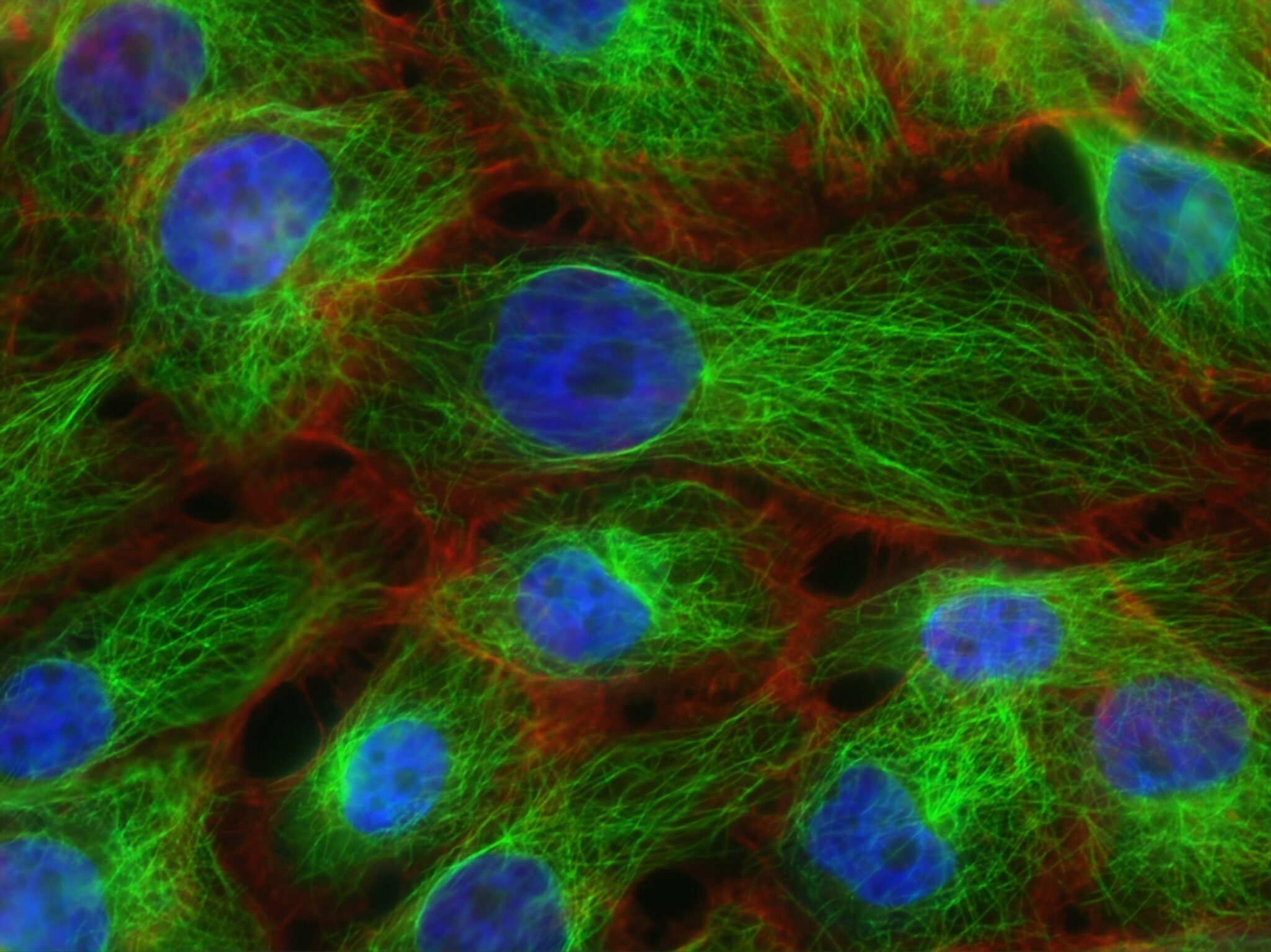
Breast cancer detection with machine learning (MIM)
- Image analysis
- Machine learning
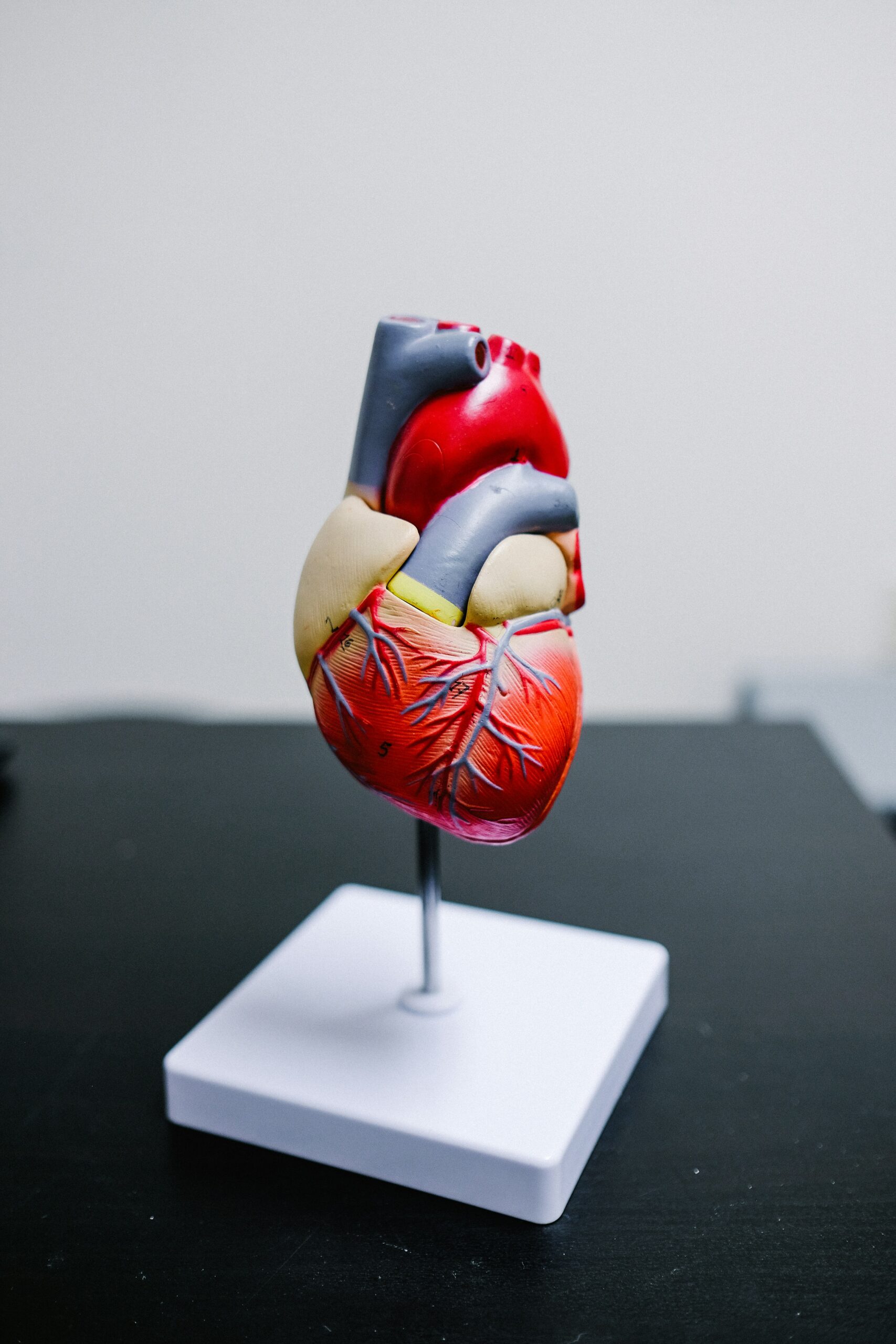
Intelligent cardiac ultrasounds (INCUS)

- Image analysis
- Machine learning
Deep learning for seismic data (DELI)
Publications
- 246 publications found
Jenssen, Robert; Wickstrøm, Kristoffer; Fahlvik, Anne Kjersti; Tegnander, Cathrine; Eikvil, Line; Tung, Karianne Oldernes; Olsen, Dag Rune and Holm, Magnus Bolstad. (2026).
Verdien av norsk KI-kompetanse, egne modeller og nasjonal innovasjonskraft? SFI Visual Intelligence UiT
Show summary
Norge er i front på bruk av kunstig intelligens (KI), og det foregår allerede en omfattende satsing på utvikling av norske løsninger i både akademia og næringslivet. Men for å sikre vår fremtidige innovasjonsevne må vi tørre å satse enda tyngre på norsk KI-kompetanse, egne modeller og nasjonal innovasjonskraft.
I dette arrangementet setter vi fokus på hvordan norsk KI-kompetanse og egenutviklede modeller kan gi oss et fortrinn i utviklingen av fremtidens KI-løsninger for både offentlig sektor og næringsliv.
Hvilke muligheter åpner dette opp for innovasjon, verdiskaping og digital suverenitet i KI-Norge? Og hvilke teknologiske, organisatoriske og politiske utfordringer må løses for å realisere dette potensialet?
Vi samler eksperter fra akademia, næringsliv, offentlig sektor og norsk politikk til en aktuell samtale om veien videre for norsk KI-utvikling.
Arrangementet er organisert av SFI Visual Intelligence, et norsk senter for forskningsdrevet innovasjon innen kunstig intelligens. Senteret ledes av UiT Norges arktiske universitet i samarbeid med Universitetet i Oslo og Norsk regnesentral.
Vedal, Amund Hansen; Utseth, Ingrid and Eikvil, Line. (2026).
Few-shot Cardiac Ultrasound View Recognition with Video Foundation Models (presentasjon). Visual intelligence
NVA
Other presentation
Vedal, Amund Hansen; Utseth, Ingrid and Eikvil, Line. (2026).
Few-shot Cardiac Ultrasound View Recognition with Video Foundation Models. visual intelligence
NVA
Poster
Vedal, Amund Hansen; Eikvil, Line; Solberg, Anne H Schistad; Salberg, Arnt Børre and Malde, Ketil. (2026).
Hierarchical classification and embedding quality of plankton. Visual Intelligence
NVA
Poster
Show summary
Poster
Utseth, Ingrid; Ordonez, Alba; Salberg, Arnt Børre; Eikvil, Line and Handegard, Nils Olav. (2026).
Towards a Foundation Model for Marine Acoustic Data. Visual Intelligence
NVA
Poster
Utseth, Ingrid; Ordonez, Alba; Salberg, Arnt Børre; Eikvil, Line and Handegard, Nils Olav. (2026).
Towards a foundation model for marine acoustic data. SFI Visual Intelligence
NVA
Other presentation
Utseth, Ingrid; Sarmad, Muhammad; Ordonez, Alba; Eikvil, Line; Salberg, Arnt Børre and Handegard, Nils Olav. (2026).
AI Methods for Fisheries Acoustics: From Supervised Classification to Foundation Model. Wageningen University
NVA
Other presentation
Show summary
This presentation provides an overview of our recent work on artificial intelligence (AI) methods for fisheries acoustic data.
Our initial work focused on acoustic target classification of Sandeel using CNNs. These models achieved strong performance. However, they required precise labels for training and most survey series lack the precise labels available for Sandeel. Often, the data is weak-ly labelled, where portions of energy in large areas are assigned to an acoustic category. We have developed methods for processing these weak labels to make them suitable for train-ing deep learning models.
We are also developing and training a foundation model (a large, general-purpose model that can be adapted to many tasks) for acoustic data using a self-supervised approach. The model will be pre-trained on a large, unlabelled dataset. During this pre-training, the mod-el learns general patterns and structures in the data. Once pre-trained, the model can be adapted to a variety of tasks, such as acoustic target classification of multiple species, using only small amounts of labelled data.
Key challenges in this work include the computational demands and large dataset required for effective pre-training, and the critical role of data sampling. We are developing sam-pling strategies using existing large-scale AI models and statistical features of the data, to ensure the model receives enough samples containing acoustic targets during pre-training.
Finally, inference code for trained models is containerized and made available as separate tasks for data processing flows, such as the Kongsberg Blue Insight system and the IMR data platforms.
Eikvil, Line and Løland, Anders. (2026).
Industrielle problemer trenger fortsatt prediktiv kunstig intelligens.
Show summary
Generativ kunstig intelligens er imponerende, men ikke alltid så nyttig til å løse industrielle problemer.
Jenssen, Robert; Eikvil, Line; Solberg, Anne H Schistad; Solheim, Inger and Bjørklund, Petter. (2026).
Visual Intelligence Annual Report 2025.
Utseth, Ingrid; Vedal, Amund Hansen; Thomas, Sarina and Eikvil, Line. (2026).
Comparing Foundation Models for Medical Images: A Study on Limited Data and Generalization.
Show summary
In this study we have investigated how vision foundation models, pretrained on different domains, compete with a specialized model for classification as a function of the size of the labeled training set of medical images. Furthermore, we have looked into the different models' ability to generalize to difficult cases. Our experiments are conducted for cardiac ultrasound images and the downstream task of view recognition. Still, this classification task is meant to serve as a demonstrative example, where we think that the findings should be transferable to other classification tasks and other domains. Through these experiments we found that the foundation models were able to beat the performance of our task-specific supervised model when labelled training data were limited. This was true even for models trained on natural images and when using the simple linear probing method to create a classifier. We observed that more domain-specific foundation models achieved an even higher performance with limited data. On the other hand, the more general models showed a greater ability to generalize and perform well on difficult, out-of-distribution cases. Still, for typical in-domain cases with sufficient labeled data, a task-specific ResNet model was competitive with the foundation models, while also being both smaller and faster.
Utseth, Ingrid; Vedal, Amund Hansen; Thomas, Sarina and Eikvil, Line. (2026).
Comparing Foundation Models for Medical Images: A Study on Limited Data and Generalization. Universitetet i Tromsø
NVA
Poster
Show summary
In this study we have investigated how vision foundation models, pretrained on different domains, compete with a specialized model for classification as a function of the size of the labeled training set of medical images. Furthermore, we have looked into the different models' ability to generalize to difficult cases. Our experiments are conducted for cardiac ultrasound images and the downstream task of view recognition. Still, this classification task is meant to serve as a demonstrative example, where we think that the findings should be transferable to other classification tasks and other domains. Through these experiments we found that the foundation models were able to beat the performance of our task-specific supervised model when labelled training data were limited. This was true even for models trained on natural images and when using the simple linear probing method to create a classifier. We observed that more domain-specific foundation models achieved an even higher performance with limited data. On the other hand, the more general models showed a greater ability to generalize and perform well on difficult, out-of-distribution cases. Still, for typical in-domain cases with sufficient labeled data, a task-specific ResNet model was competitive with the foundation models, while also being both smaller and faster.
Jenssen, Robert; Eikvil, Line; Solberg, Anne H Schistad; Solheim, Inger and Bjørklund, Petter. (2025).
Visual Intelligence Annual Report 2024.
Show summary
The Visual Intelligence Annual Report 2024 highlights the centre's progress, activities and achieved innovations for 2022. It describes new deep learning methods which address pressing societal needs in the fields of medicine and health, marine science, the energy sector, and earth observation.
Ordoñez, Alba; Dahl, Fredrik Andreas; Brautaset, Olav and Eikvil, Line. (2025).
Unsupervised Domain Adaptation for Breast Cancer Detection in a Multi-Scanner Environment: A Case-Study from Norway.
Show summary
Maintaining the performance of a deep learning model trained for breast cancer detection on a specific scanner type is challenging in a multi-scanner setting due to domain shifts caused by variations in imaging data. This often results in a performance drop when models trained on one scanner are tested on another. While re-training with labeled data from the new scanner is an option, delays in obtaining ground-truth labels make this approach impractical. To overcome this limitation, Unsupervised Domain Adaptation (UDA) offers a promising alternative by enabling models to adapt across scanners without requiring labeled target data. In this study, we investigated Conditional Domain-Adversarial Network (CDAN), an adversarial UDA approach, to adapt a classifier trained on Siemens scanner data using nearly 3 million mammograms from the Norwegian breast cancer screening program. We compared it to Maximum Mean Discrepancy (MMD), a simpler statistical feature alignment method, and evaluated histogram matching, which required no additional training. Our findings showed that the AUC drop on the target GE data (0.96 to 0.62) without adaptation was mitigated by histogram matching (AUC 0.84), but that was less effective than MMD (AUC 0.87), which performed competitively with CDAN. Further ablation with Domain-Adversarial Neural Network (DANN), the foundation of CDAN, suggested limitations in the domain discriminator. Unlike prior work focusing solely on performance, we paired UDA with explainability. This revealed how feature relevance shifted across scanner domains, offering novel insights into model generalizability in cancer detection.
Dahl, Fredrik Andreas; Vedal, Amund; Eikvil, Line; Thrun, Solveig; Kampffmeyer, Michael and Hofvind, Solveig Sand-Hanssen. (2025).
Modelling Uncertainty in Graph Convolutional Networks for Edge Detection in Mammograms.
Show summary
Delineation of structures and estimation of landmarks in mammograms is a critical step in the evaluation of image quality in breast cancer screening, but requires the estimation of the uncertainty of the predicted landmarks to refer uncertain cases to clinicians. Of particular importance – and the focus of this work – is on the pectoral muscle, where the variability in muscle visibility across images introduces significant uncertainty. While graph convolutional networks (GCN) have been demonstrated to accurately predict landmarks by explicitly leveraging structural relationships between landmarks, they typically lack the ability to provide accurate uncertainty estimates for the landmarks. To address this shortcoming, in this work we propose a novel GCN-based approach that not only locates key points along the muscle boundary but also provides accurate uncertainty estimates, capturing both the aleatoric and epistemic uncertainties. Our method was evaluated on in-house annotated mammograms demonstrating comparable accuracy to human annotators, while at the same time providing highly accurate uncertainty estimates, confirming its potential for identifying cases that require human review. We further validate our proposed approach on the publicly available CSAW-S and INBreast datasets, demonstrating its robustness to domain shift, as well as its potential to detect incorrect or untypical annotations.
Utseth, Ingrid; Sarmad, Muhammad; Eikvil, Line; Salberg, Arnt Børre; Ordonez, Alba and Brautaset, Olav. (2025).
Leveraging Data with Strong, Weak and No Labels in Marine Acoustics. SFI Visual Intelligence
NVA
Poster
Utseth, Ingrid; Ordonez, Alba; Sarmad, Muhammad; Salberg, Arnt Børre; Eikvil, Line; Brautaset, Olav and Handegard, Nils Olav. (2025).
Deep learning for marine acoustics: Leveraging data with strong, weak and no labels. SFI Visual Intelligence
NVA
Lecture
Utseth, Ingrid; Brautaset, Olav; Eikvil, Line; Ordonez, Alba; Salberg, Arnt Børre; Sarmad, Muhammad; Holmin, Arne Johannes; Pala, Ahmet and Handegard, Nils Olav. (2025).
Deep learning methods for acoustic target classification. Iceland’s Marine and Freshwater Research Institute
NVA
Other presentation
Martiniussen, Marit Almenning; Larsen, Marthe; Hovda, Tone; SANDHAUG, MERETE; Dahl, Fredrik Andreas; Eikvil, Line; Brautaset, Olav; Bjørnerud, Atle; Kristensen, Vessela N.; Bergan, Marie Burns and Hofvind, Solveig Sand-Hanssen. (2025).
Performance of Two Deep Learning–based AI Models for Breast Cancer Detection and Localization on Screening Mammograms from BreastScreen Norway.
Show summary
Two deep learning–based artificial intelligence (AI) models, one commercially available and one in-house, showed good performance for stand-alone cancer detection on retrospective mammography screening data. AI markings on the mammograms corresponded well to the true cancer location. Purpose - To evaluate cancer detection and marker placement accuracy of two artificial intelligence (AI) models developed for interpretation of screening mammograms. Materials and Methods - This retrospective study included data from 129 434 screening examinations (all female patients; mean age, 59.2 years ± 5.8 [SD]) performed between January 2008 and December 2018 in BreastScreen Norway. Model A was commercially available and model B was an in-house model. Area under the receiver operating characteristic curve (AUC) with 95% CIs were calculated. The study defined 3.2% and 11.1% of the examinations with the highest AI scores as positive, threshold 1 and 2, respectively. A radiologic review assessed location of AI markings and classified interval cancers as true or false negative. Results - The AUC value was 0.93 (95% CI: 0.92, 0.94) for model A and B when including screen-detected and interval cancers. Model A identified 82.5% (611 of 741) of the screen-detected cancers at threshold 1 and 92.4% (685 of 741) at threshold 2. Model B identified 81.8% (606 of 741) at threshold 1 and 93.7% (694 of 741) at threshold 2. The AI markings were correctly localized for all screen-detected cancers identified by both models and 82% (56 of 68) of the interval cancers for model A and 79% (54 of 68) for model B. At the review, 21.6% (45 of 208) of the interval cancers were identified at the preceding screening by either or both models, correctly localized and classified as false negative (n = 17) or with minimal signs of malignancy (n = 28). Conclusion - Both AI models showed promising performance for cancer detection on screening mammograms. The AI markings corresponded well to the true cancer locations.
Ordonez, Alba; Dahl, Fredrik Andreas; Brautaset, Olav and Eikvil, Line. (2025).
Unsupervised domain adaptation for breast cancer detection in a multi-scanner environment: A case-study from Norway. AIME2025
NVA
Scientific lecture
Jenssen, Robert; Eikvil, Line; Solberg, Anne H Schistad; Solheim, Inger and Bjørklund, Petter. (2024).
Visual Intelligence Annual Report 2023.
Utseth, Ingrid; Vedal, Amund Hansen; Eikvil, Line and Waldeland, Anders U.. (2024).
Experiments with Foundation Models for Cardiac Ultrasound Images in Limited Data Scenarios. SFI Visual Intelligence
NVA
Lecture
Utseth, Ingrid; Vedal, Amund Hansen; Eikvil, Line and Waldeland, Anders U.. (2024).
Experiments with Foundation Models for
Cardiac Ultrasound Images in Limited Data
Scenarios. SFI Visual Intelligence
NVA
Poster
Utseth, Ingrid; Vedal, Amund Hansen; Eikvil, Line and Waldeland, Anders U.. (2024).
Experiments with foundation models for cardiac ultrasound images.
NVA
Report
Utseth, Ingrid; Vedal, Amund Hansen and Eikvil, Line. (2024).
Detection of timing events in cardiac ultrasound.
NVA
Report
Løland, Anders and Eikvil, Line. (2024).
«In the 90s, everybody knew that AI didn't work.» Hvorfor hadde Sergey Brin rett da han sa det?
NVA
Program participation
Dahl, Fredrik Andreas; Brautaset, Olav; Holden, Marit; Eikvil, Line; Larsen, Marthe; Martiniussen, Marit Almenning and Hofvind, Solveig Sand-Hanssen. (2024).
En to-trinns kunstig intelligens modell for deteksjon av brystkreft i mammogrammer. Norsk radiologisk forening
NVA
Lecture
Jenssen, Robert; Eikvil, Line; Solberg, Anne H Schistad and Solheim, Inger. (2023).
Visual Intelligence Annual Report 2022.
Dahl, Fredrik Andreas; Eikvil, Line and Vedal, Amund Hansen. (2023).
Training GCN on breast positioning using partially annotated mammograms. Visual Intelligence (SFI)
NVA
Poster
Dahl, Fredrik Andreas; Holden, Marit; Brautaset, Olav and Eikvil, Line. (2023).
Utilizing earlier images in mammography cancer detection. Visual Intelligence (SFI)
NVA
Poster
Dahl, Fredrik Andreas; Eikvil, Line and Vedal, Amund Hansen. (2023).
Training GCN on breast positioning using partially annotated mammograms. Visual Intelligence (SFI)
NVA
Scientific lecture
Brautaset, Olav; Utseth, Ingrid; Eikvil, Line; Salberg, Arnt-Børre and Handegard, Nils Olav. (2023).
Learning from weakly labelled marine acoustic data. Visual Intelligence
NVA
Poster
Brautaset, Olav; Utseth, Ingrid; Eikvil, Line; Salberg, Arnt-Børre and Handegard, Nils Olav. (2023).
Learning from weakly labelled marine acoustic data. Visual Intelligence
NVA
Scientific lecture
Vedal, Amund Hansen and Eikvil, Line. (2023).
Context-Aware Landmark Detection for 2D Cardiac Ultrasound using Graph Convnet.
NVA
Report
Dahl, Fredrik Andreas; Brautaset, Olav; Holden, Marit; Eikvil, Line; Larsen, Marthe and Hofvind, Solveig Sand-Hanssen. (2023).
A two-stage mammography classification model using explainable-AI for ROI detection.
Show summary
This study introduces an enhanced version of a two-stage modelling approach using artificial intelligence (AI) for breast cancer detection in mammography screening. Leveraging a large dataset of 2,863,175 mammograms from the BreastScreen Norway, the approach uses two convolutional neural networks. The first one is trained to classify whole images, and an explainable-AI method is applied to this network to identify a region of interest (ROI). The second neural network subsequently classifies the ROI for malignancy. While a prior method used simple gradient saliency maps to identify ROIs, a key enhancement of the present methodology is the application of Layered GradCam, which identifies cancerous areas more consistently and allows smaller ROIs. Layered GradCam is also used to display identified cancers to the user. By the AUC criterion, our model performs well, 0.974 for screen-detected and 0.931 for all cancers (screen-detected and interval), compared to a commercial program; 0.959 and 0.918, respectively. Comparisons with the radiologist scores indicate that the model has equal performance with two radiologists, and superior performance to one, for the detection of all cancers (screening- and interval type). Our tests indicate that our model generalizes well for different breast centers, but so far only images from a single manufacturer have been tested.
Dahl, Fredrik Andreas; Eikvil, Line; Tvete, Ingunn Fride; Lison, Pierre; Pilán, Ildikó; Fuglerud, Kristin Skeide and Leister, Wolfgang. (2023).
Helse-effektivisering - et mulig satsningsområde for NR.
NVA
Report
Salberg, Arnt-Børre and Eikvil, Line. (2023).
Out-of-distribution detection in deep neural networks applied to marine data. Visual Intelligence
NVA
Poster
Jenssen, Robert; Eikvil, Line; Solberg, Anne H Schistad and Solheim, Inger. (2022).
Visual Intelligence Annual Report 2021.
Show summary
The Visual Intelligence Annual Report 2021 highlights the centre's progress, activities and achieved innovations for 2021. It describes new deep learning methods which address pressing societal needs in the fields of medicine and health, marine science, the energy sector, and earth observation.
Dahl, Fredrik Andreas; Vedal, Amund Hansen and Eikvil, Line. (2022).
Analyzing breast positioning in mammograms with graph convolutional networks. Visual Intelligence (SFI)
NVA
Scientific lecture
Dahl, Fredrik Andreas; Holden, Marit; Brautaset, Olav and Eikvil, Line. (2022).
A mammography classification model trained from image labels only. Visual Intelligence center for research-based innovation and Uinversity of Tromsø
NVA
Poster
Petterson, Jarle; Eikvil, Line; Fuglerud, Kristin Skeide; Fredrik, Dahl and Halbach, Till. (2022).
Kunstig intelligens avlaster travle spesialister.
NVA
Interview
Eikvil, Line; Waldeland, Anders U.; Barker, Daniel Martin L; Holden, Marit; Hauge, Ragnar and Salberg, Arnt Børre. (2022).
Deep learning in seismic interpretation,
Development and experiments 2021-2022.
NVA
Report
Ordonez, Alba; Eikvil, Line; Salberg, Arnt-Børre; Harbitz, Alf and Elvarsson, Bjarki Thor. (2022).
Automatic Fish Age Determination across Different Otolith Image Labs Using Domain Adaptation.
Show summary
The age determination of fish is fundamental to marine resource management. This task is commonly done by analysis of otoliths performed manually by human experts. Otolith images from Greenland halibut acquired by the Institute of Marine Research (Norway) were recently used to train a convolutional neural network (CNN) for automatically predicting fish age, opening the way for requiring less human effort and availability of expertise by means of deep learning (DL). In this study, we demonstrate that applying a CNN model trained on images from one lab (in Norway) does not lead to a suitable performance when predicting fish ages from otolith images from another lab (in Iceland) for the same species. This is due to a problem known as dataset shift, where the source data, i.e., the dataset the model was trained on have different characteristics from the dataset at test stage, here denoted as target data. We further demonstrate that we can handle this problem by using domain adaptation, such that an existing model trained in the source domain is adapted to perform well in the target domain, without requiring extra annotation effort. We investigate four different approaches: (i) simple adaptation via image standardization, (ii) adversarial generative adaptation, (iii) adversarial discriminative adaptation and (iv) self-supervised adaptation. The results show that the performance varies substantially between the methods, with adversarial discriminative and self-supervised adaptations being the best approaches. Without using a domain adaptation approach, the root mean squared error (RMSE) and coefficient of variation (CV) on the Icelandic dataset are as high as 5.12 years and 28.6%, respectively, whereas by using the self-supervised domain adaptation, the RMSE and CV are reduced to 1.94 years and 11.1%. We conclude that careful consideration must be given before DL-based predictors are applied to perform large scale inference. Despite that, domain adaptation is a promising solution for handling problems of dataset shift across image labs.
Thorarinsdottir, Thordis Linda; Roksvåg, Thea Julie Thømt and Eikvil, Line. (2022).
Birdcam: Automatic monitoring of birds near wind parks.
NVA
Report
Vedal, Amund Hansen; Eikvil, Line; Holden, Marit and Gilbert, Andrew. (2022).
Context-Aware Landmark Detection for 2D Cardiac Ultrasound using Graph Convnet. GE Vingmed Ultrasound
NVA
Scientific lecture
Utseth, Ingrid; Ordonez, Alba; Eikvil, Line; Brautaset, Olav; Salberg, Arnt Børre and Handegard, Nils Olav. (2022).
Improving marine acoustic target classification with context information. International Council for the Exploration of the Sea
NVA
Poster
Dahl, Fredrik Andreas; Holden, Marit; Brautaset, Olav and Eikvil, Line. (2022).
A mammography classification model trained from image labels only.
Show summary
The Cancer Registry of Norway organises a population-based breast cancer screening program, where 250 000 women participate each year. The interpretation of the screening mammograms is a manual process, but deep neural networks are showing potential in mammographic screening. Most methods focus on methods trained from pixel-level annotations, but these require expertise and are time-consuming to produce. Through the screenings, image level annotations are however readily available. In this work we present a few models trained from image level annotations from the Norwegian dataset: a holistic model, an attention model and an ensemble model. We compared their performance with that of pretrained models based on pixel-level annotations, trained on international datasets. From this we found that models trained on our local data with image-level annotation gave considerably better performance than the pretrained models from external data, although based on pixel-level annotations.
Dahl, Fredrik Andreas; Holden, Marit; Brautaset, Olav and Eikvil, Line. (2022).
A two-stage mammography classification model using XAI for ROI detection. Visual Intelligence (SFI)
NVA
Poster
Eikvil, Line. (2022).
Slik bruker vi norske mammogrammer for å utvikle et maskinlæringssystem. Kreftregisteret
NVA
Lecture
Vedal, Amund Hansen; Eikvil, Line and Holden, Marit. (2022).
Context-Aware Landmark Detection for 2D Cardiac Ultrasound using a Graph Convolution Network.
NVA
Poster
Ordonez, Alba; Vedal, Amund Hansen; Dahl, Fredrik Andreas and Eikvil, Line. (2022).
Explainability and uncertainty for classification of mammograms. Visual Intelligence centre for research-based innovation and university of Tromsø
NVA
Poster
Dahl, Fredrik Andreas; Holden, Marit; Brautaset, Olav and Eikvil, Line. (2022).
Machine learning for screening mammography.
NVA
Report
Eikvil, Line; Dahl, Fredrik Andreas; Holden, Marit; Brautaset, Olav; Hofvind, Solveig Sand-Hanssen; Aglen, Camilla Flåt and Larsen, Marthe. (2022).
Procedures for mammographic screening with machine learning.
NVA
Report
Jenssen, Robert; Eikvil, Line; Solberg, Anne H Schistad and Solheim, Inger. (2021).
Visual Intelligence Annual Report 2020.
Show summary
The Visual Intelligence Annual Report 2020 highlights the centre's progress, activities and achieved innovations for 2020. It describes new deep learning methods which address pressing societal needs in the fields of medicine and health, marine science, the energy sector, and earth observation.
Choi, Changkyu; Kampffmeyer, Michael; Handegard, Nils Olav; Salberg, Arnt Børre; Brautaset, Olav; Eikvil, Line and Jenssen, Robert. (2021).
Semi-supervised target classification in multi-frequency echosounder data.
Show summary
Acoustic target classification in multi-frequency echosounder data is a major interest for the marine ecosystem and fishery management since it can potentially estimate the abundance or biomass of the species. A key problem of current methods is the heavy dependence on the manual categorization of data samples. As a solution, we propose a novel semi-supervised deep learning method leveraging a few annotated data samples together with vast amounts of unannotated data samples, all in a single model. Specifically, two inter-connected objectives, namely, a clustering objective and a classification objective, optimize one shared convolutional neural network in an alternating manner. The clustering objective exploits the underlying structure of all data, both annotated and unannotated; the classification objective enforces a certain consistency to given classes using the few annotated data samples. We evaluate our classification method using echosounder data from the sandeel case study in the North Sea. In the semi-supervised setting with only a tenth of the training data annotated, our method achieves 67.6% accuracy, outperforming a conventional semi-supervised method by 7.0 percentage points. When applying the proposed method in a fully supervised setup, we achieve 74.7% accuracy, surpassing the standard supervised deep learning method by 4.7 percentage points.
Jenssen, Robert; Solberg, Anne H Schistad and Eikvil, Line. (2021).
Norge er verdensledende
på bildeanalyse med
kunstig intelligens.
NVA
Interview
Eikvil, Line. (2021).
Deep Learning for Norwegian Breast Cancer Screening. Computational Radiology & Artificial Intelligence
NVA
Lecture
Ordonez, Alba; Utseth, Ingrid; Eikvil, Line and Handegard, Nils Olav. (2021).
Using model averaging ensembles in semantic segmentation of marine echosounder data for acoustic classification of species. Norsk Forening for Bildebehandling og Maskinlæring
NVA
Scientific lecture
Ordonez, Alba; Eikvil, Line and Holden, Marit. (2021).
Learning motion of seismic structures without human labelling. Visual Intelligence centre for research-based innovation
NVA
Scientific lecture
Show summary
Recent research published by Li and Abubakar (2020) investigated if the sediment interpretation could be done based on an idea inspired from video analysis, without involving human labelling. The aim of the study was understand how the proposed approach worked and investigate whether we could use it for detecting discontinuities in seismic structures.
Utseth, Ingrid; Ordonez, Alba; Eikvil, Line; Brautaset, Olav; Salberg, Arnt-Børre and Handegard, Nils Olav. (2021).
Improving marine acoustic target classification with context information. Visual Intelligence centre for research-based innovation
NVA
Poster
Show summary
The aim of the study was to investigate whether context information related to acoustic data resolution could improve automatic acoustic classification of species using echosounder observations.
Handegard, Nils Olav; Eikvil, Line; Jenssen, Robert; Kampffmeyer, Michael; Salberg, Arnt Børre and Malde, Ketil. (2021).
Machine Learning + Marine Science: Critical Role of Partnerships in Norway.
Show summary
In this essay, we review some recent advances in developing machine learning (ML) methods for marine science applications in Norway. We focus mostly on deep learning (DL) methods and review the challenges we have faced in the process, including data preparation, (lack of) labelled training data, and interpretability. We also present the partnerships that have been formed between e-science institutions and marine science
institutions in Norway. These partnerships have been instrumental in moving this effort forward and have been fuelled by grants from the Norwegian Research Council. The last addition to this collaboration is the recent centres for research-based innovation in Marine Acoustic Abundance Estimation and Backscatter Classification (CRIMAC) and
Visual Intelligence (VI).
Ordonez, Alba; Harbitz, Alf; Elvarsson, Bjarki; Eikvil, Line and Salberg, Arnt-Børre. (2021).
Deep domain adaptation applied to automatic fish age prediction. Visual Intelligence centre for research-based innovation
NVA
Scientific lecture
Show summary
During the presentation, we investigated how a model trained for automatic fish age prediction on otolith images from one lab could generalize to novel images from another lab. We identified Unsupervised Domain Adaptation based on coGAN (Liu and Tuzel, 2016) and Generate to Adapt (Sankaranarayanan et al., 2018) frameworks as promising methods.
Eikvil, Line; Holden, Marit and Ordonez, Alba. (2021).
Machine learning for image-based interpretation of non-verbal communication - Initial version.
NVA
Report
Eikvil, Line; Holden, Marit; Holden, Lars and Brautaset, Olav. (2021).
Machine learning for screening mammography.
NVA
Report
Handegard, Nils Olav; Algrøy, Tonny; Eikvil, Line; Hammersland, Hege; Tenningen, Maria and Ona, Egil. (2021).
Smart Fisheries in Norway: Partnership between Science, Technology, and the Fishing Sector.
NVA
Article journal
Show summary
The Research Council of Norway recently
funded the Centre for Research-based
Innovation in Marine Acoustic Abundance
Estimation and Backscatter Classification
(CRIMAC). The centre has smart fisheries as
one of its main pillars, and will address reliable
catch quantification, sizing, and species
identification of individual fish. It builds on a
long tradition of science-industry partnership
in Norway. In this essay, we review how this
science-industry partnership has formed
through long standing collaborations between
marine science organizations, innovative
fishing companies, and the marine-tech
industry. The results from this collaboration
have led to instruments and methods being
used worldwide for smart fishing operations
and monitoring the marine environment
Choi, Changkyu; Kampffmeyer, Michael; Handegard, Nils Olav; Salberg, Arnt Børre; Eikvil, Line and Jenssen, Robert. (2021).
Semi-supervised Semantic Segmentation in Multi-frequency Echosounder Data. Robert Jenssen, Inger Solheim
NVA
Poster
Eikvil, Line; Holden, Marit and Ordonez, Alba. (2021).
Machine learning for image-based interpretation of non-verbal communication.
NVA
Report
Gilbert, Andrew David; Holden, Marit; Eikvil, Line; Rakhmail, Mariia; Babic, Aleksandar; Aase, Svein Arne; Samset, Eigil and Mcleod, Kristin. (2020).
User-Intended Doppler Measurement Type Prediction Combining CNNs With Smart Post-Processing.
Show summary
Spectral Doppler measurements are an important part of the standard echocardiographic examination. These measurements give insight into myocardial motion and blood flow providing clinicians with parameters for diagnostic decision making. Many of these measurements are performed automatically with high accuracy, increasing the efficiency of the diagnostic pipeline. However, full automation is not yet available because the user must manually select which measurement should be performed on each image. In this work, we develop a pipeline based on convolutional neural networks (CNNs) to automatically classify the measurement type from cardiac Doppler scans. We show how the multi-modal information in each spectral Doppler recording can be combined using a meta parameter post-processing mapping scheme and heatmaps to encode coordinate locations. Additionally, we experiment with several architectures to examine the tradeoff between accuracy, speed, and memory usage for resource-constrained environments. Finally, we propose a confidence metric using the values in the last fully connected layer of the network and show that our confidence metric can prevent many misclassifications. Our algorithm enables a fully automatic pipeline from acquisition to Doppler spectrum measurements. We achieve 96% accuracy on a test set drawn from separate clinical sites, indicating that the proposed method is suitable for clinical adoption.
Eikvil, Line; Ordonez, Alba and Brautaset, Olav. (2020).
Feasibility study: Non-verbal communication interpreter - Image-based methodological approaches.
NVA
Report
Brautaset, Olav; Waldeland, Anders Ueland; Johnsen, Espen; Malde, Ketil; Eikvil, Line; Salberg, Arnt-Børre and Handegard, Nils Olav. (2020).
Acoustic classification in multifrequency echosounder data using deep convolutional neural networks.
Show summary
Acoustic target classification is the process of assigning observed acoustic backscattering intensity to an acoustic category. A deep learning strategy for acoustic target classification using a convolutional network is developed, consisting of an encoder and a decoder, which allow the network to use pixel information and more abstract features. The network can learn features directly from data, and the learned feature space may include both frequency response and school morphology. We tested the method on multifrequency data collected between 2007 and 2018 during the Norwegian sandeel survey. The network was able to distinguish between sandeel schools, schools of other species, and background pixels (including seabed) in new survey data with an F1 score of 0.87 when tested against manually labelled schools. The network separated schools of sandeel and schools of other species with an F1 score of 0.94. A traditional school classification algorithm obtained substantially lower F1 scores (0.77 and 0.82) when tested against the manually labelled schools. To train the network, it was necessary to develop sampling and preprocessing strategies to account for unbalanced classes, inaccurate annotations, and biases in the training data. This is a step towards a method to be applied across a range of acoustic trawl surveys.
Ordonez, Alba; Eikvil, Line; Salberg, Arnt-Børre; Harbitz, Alf; Murray, Sean Meling and Kampffmeyer, Michael. (2020).
Explaining decisions of deep neural networks used for fish age prediction.
Show summary
Age-reading of fish otoliths (ear stones) is important for the sustainable management of fish resources. However, the procedure is challenging and requires experienced readers to carefully examine annual growth zones. In a recent study, convolutional neural networks (CNNs) have been demonstrated to perform reasonably well on automatically predicting fish age from otolith images. In the present study, we carefully investigate the prediction rule learned by such neural networks to provide insight into the features that identify certain fish age ranges. For this purpose, a recent technique for visualizing and analyzing the predictions of the neural networks was applied to different versions of the otolith images. The results indicate that supplementary knowledge about the internal structure improves the results for the youngest age groups, compared to using only the contour shape attribute of the otolith. However, the contour shape and size attributes are, in general, sufficient for older age groups. In addition, within specific age ranges we find that the network tends to focus on particular areas of the otoliths and that the most discriminating factors seem to be related to the central part and the outer edge of the otolith. Explaining age predictions from otolith images as done in this study will hopefully help build confidence in the potential of deep learning algorithms for automatic age prediction, as well as improve the quality of the age estimation.
Malde, Ketil; Handegard, Nils Olav; Eikvil, Line and Salberg, Arnt Børre. (2020).
Machine intelligence and the data-driven future of marine science.
Show summary
Oceans constitute over 70% of the earth’s surface, and the marine environment and ecosystems are central to many global challenges. Not only are the oceans an important source of food and other resources, but they also play a important roles in the earth’s climate and provide crucial ecosystem services. To monitor the environment and ensure sustainable exploitation of marine resources, extensive data collection and analysis efforts form the backbone of management programmes on global, regional, or national levels. Technological advances in sensor technology, autonomous platforms, and information and communications technology now allow marine scientists to collect data in larger volumes than ever before. But our capacity for data analysis has not progressed comparably, and the growing discrepancy is becoming a major bottleneck for effective use of the available data, as well as an obstacle to scaling up data collection further. Recent years have seen rapid advances in the fields of artificial intelligence and machine learning, and in particular, so-called deep learning systems are now able to solve complex tasks that previously required human expertise. This technology is directly applicable to many important data analysis problems and it will provide tools that are needed to solve many complex challenges in marine science and resource management. Here we give a brief review of recent developments in deep learning, and highlight the many opportunities and challenges for effective adoption of this technology across the marine sciences.
Ordonez, Alba; Eikvil, Line; Salberg, Arnt Børre and Harbitz, Alf. (2020).
Understanding a Neural Network by Visualization: Application to Fish Age Prediction. Universitetet i Trømsø
NVA
Poster
Eikvil, Line; Waldeland, Anders U.; Barker, Daniel Martin L; Holden, Marit; Hauge, Ragnar and Salberg, Arnt Børre. (2020).
Deep learning in seismic interpretations - Development and experiments 2020.
NVA
Report
Eikvil, Line. (2020).
Google har utviklet kunstig intelligens som gjenkjenner brystkreft bedre enn radiologer - Kreftregisteret og Norsk Regnesentral lager norsk variant.
NVA
Interview
Eikvil, Line; Holden, Marit; Holden, Lars and Brautaset, Olav. (2020).
Machine learning for screening mammography - Initial analyses on a first limited dataset.
NVA
Report
Ordonez, Alba; Eikvil, Line and Salberg, Arnt Børre. (2019).
Visualization of deep neural networks applied to fish age prediction.
NVA
Report
Salberg, Arnt Børre; Eikvil, Line; Malde, Ketil and Handegard, Nils Olav. (2019).
The COGMAR project. Institute of Marine Research
NVA
Scientific lecture
Murray, Sean Meling; Eikvil, Line and Salberg, Arnt Børre. (2019).
Automatic interpretation of otoliths with deep learning - explaining predictions.
NVA
Report
Eikvil, Line and Holden, Marit. (2019).
Deep learning for ultrasound images - next steps.
NVA
Report
Eikvil, Line; Waldeland, Anders U.; Holden, Marit; Salberg, Arnt Børre; Hauge, Ragnar and Barker, Daniel Martin L. (2019).
Deep learning in seismic interpretation.
NVA
Report
Gilbert, Andrew David; Holden, Marit; Eikvil, Line; Aase, Svein Arne; Samset, Eigil and Mcleod, Kristin. (2019).
Automated Left Ventricle Dimension Measurement in 2D Cardiac Ultrasound via an Anatomically Meaningful CNN Approach.
Show summary
Two-dimensional echocardiography (2DE) measurements of left ventricle (LV) dimensions are highly significant markers of several cardiovascular diseases. These measurements are often used in clinical care despite suffering from large variability between observers. This variability is due to the challenging nature of accurately finding the correct temporal and spatial location of measurement endpoints in ultrasound images. These images often contain fuzzy boundaries and varying reflection patterns between frames. In this work, we present a convolutional neural network (CNN) based approach to automate 2DE LV measurements. Treating the problem as a landmark detection problem, we propose a modified U-Net CNN architecture to generate heatmaps of likely coordinate locations. To improve the network performance we use anatomically meaningful heatmaps as labels and train with a multi-component loss function. Our network achieves 13.4%, 6%, and 10.8% mean percent error on intraventricular septum (IVS), LV internal dimension (LVID), and LV posterior wall (LVPW) measurements respectively. The design outperforms other networks and matches or approaches intra-analyser expert error.
Salberg, Arnt Børre and Eikvil, Line. (2019).
The COGMAR project: Ubiquitous cognitive computer vision for marine services. Capgemini
NVA
Lecture
Eikvil, Line; Holden, Marit; Hauge, Ragnar and Kvernelv, Vegard Berg. (2019).
Estimation of rock cuttings size from images.
NVA
Report
Eikvil, Line and Holden, Lars. (2018).
Bruk av Deep learning and Big Data i Mammografiprogrammet. Mammografiprogrammet
NVA
Lecture
Salberg, Arnt Børre and Eikvil, Line. (2016).
Deep learning: machine learning meets big data.
NVA
Scientific lecture
Salberg, Arnt Børre and Eikvil, Line. (2016).
Deep learning: a powerful tool to solve your computer vision problems.
NVA
Scientific lecture
Haugen, Marion; Eikvil, Line; Tvete, Ingunn Fride and Kvaal, Sigrid Ingeborg. (2016).
Development of improved methods or basis for medical age assessments of minors and young adults.
Show summary
This final report describes the results of the research conducted in the project «Development of improved methods or basis for medical age assessments of minors and young adults». The aim of the project has been to contribute to develop improved methods for measuring physical developments of a child or young adult and for assessing the chronological age based on such measurements, giving an improved basis for such assessments. The project has brought together various international experts, both from the medical and odontology fields. The project has been an international collaboration with a group of partners with experience from both practical age estimation and research, from both of the currently used radiographic methods in Norway (wrist and teeth) and new MRI approaches. Several disciplines have been incorporated in the project: odontology, pediatrics, radiography, statistical modeling and image analysis. Additional descriptions of methods and results from the statistical analyses and image analysis can be found in four additional notes. The project is funded by The Norwegian Directorate of Immigration.
Eikvil, Line; Jenssen, Tor-Kristian and Holden, Marit. (2015).
Multi-focus cluster labeling.
Show summary
Document collections resulting from searches in the biomedical literature, for instance, in PubMed, are often so large that some organization of the returned information is necessary. Clustering is an efficient tool for organizing search results. To help the user to decide how to continue the search for relevant documents, the content of each cluster can be characterized by a set of representative keywords or cluster labels. As different users may have different interests, it can be desirable with solutions that make it possible to produce labels from a selection of different topical categories. We therefore introduce the concept of multi-focus cluster labeling to give users the possibility to get an overview of the contents through labels from multiple viewpoints.
The concept for multi-focus cluster labeling has been established and has been demonstrated on three different document collections. We illustrate that multi-focus visualizations can give an overview of clusters along axes that general labels are not able to convey. The approach is generic and should be applicable to any biomedical (or other) domain with any selection of foci where appropriate focus vocabularies can be established. A user evaluation also indicates that such a multi-focus concept is useful.
Eikvil, Line and Holden, Marit. (2015).
Utvalg av deskriptorer for oppbygging av database.
NVA
Report